We tend to imagine the ocean floor as an eternally dark abyss, devoid of light, and by extension, of life. School biology teaches us that every living thing depends on the sun for survival; thus, any being that inhabits those shadows seems to necessarily belong to another world. A world, at the very least, alien. It’s as if the depths of the sea were on Mars and not just a few kilometers from the coast. In fact, until 1876, when scientists on the HMS Challenger proved otherwise, it was believed that life beyond a depth of 550 meters was simply impossible.
Underwater life would begin to reveal itself as something more than a collection of creatures preserved in formaldehyde twenty years later, when biologist Louis Boutan—a pioneer of photography—captured the first underwater image. Obsessed with obtaining a faithful record of his dives in search of mollusks, Boutan designed a camera capable of withstanding pressure and compensating for the lack of sunlight. The first image, taken 50 meters below the sea’s surface, shows a sign that clearly reads: Photographie Sous-Marine: a visionary tautology. His subsequent photographs managed to capture and popularize landscapes of intertwined flora and fauna, previously unimaginable. From that moment on, seeing underwater became a popular fascination and a motive for scientific, technological, and aesthetic research that fueled the imagination of progress.
In 1934, for example, the American naturalist William Beebe descended 923 meters aboard his bathysphere—a kind of small one-person submarine—diving to depths where, according to him, only the dead had descended. Once out of the water, Beebe wrote, “We were the first living men to behold the strange illumination: and it was stranger than any imagination could conceive. It was of an indefinable translucent blue…” His chromatic prose expanded the boundaries of the representation of the marine world, transforming it, in the collective imagination, into something worthy of protection.
Almost a century later, the ocean has become a contested territory: a dark, though no longer impenetrable, abyss subject to the dictates of techno-capitalism. Boutan’s and Beebe’s photographs are murky and hazy, not because of any technical failure, but because they capture the density of “marine snow”: that suspension of organic sediments vital to the survival of any aquatic ecosystem. However, as the effects of global warming increase ever more rapidly, images of oceanic outreach reduce underwater life to solitary specimens devoid of any agency, floating in a vacuous and artificial darkness. Today, marine snow has been eradicated from our imagination, simultaneously obliterating the complexity of marine ecosystems: reducing the depths to a terra nullius ripe for conquest.
Picorocos
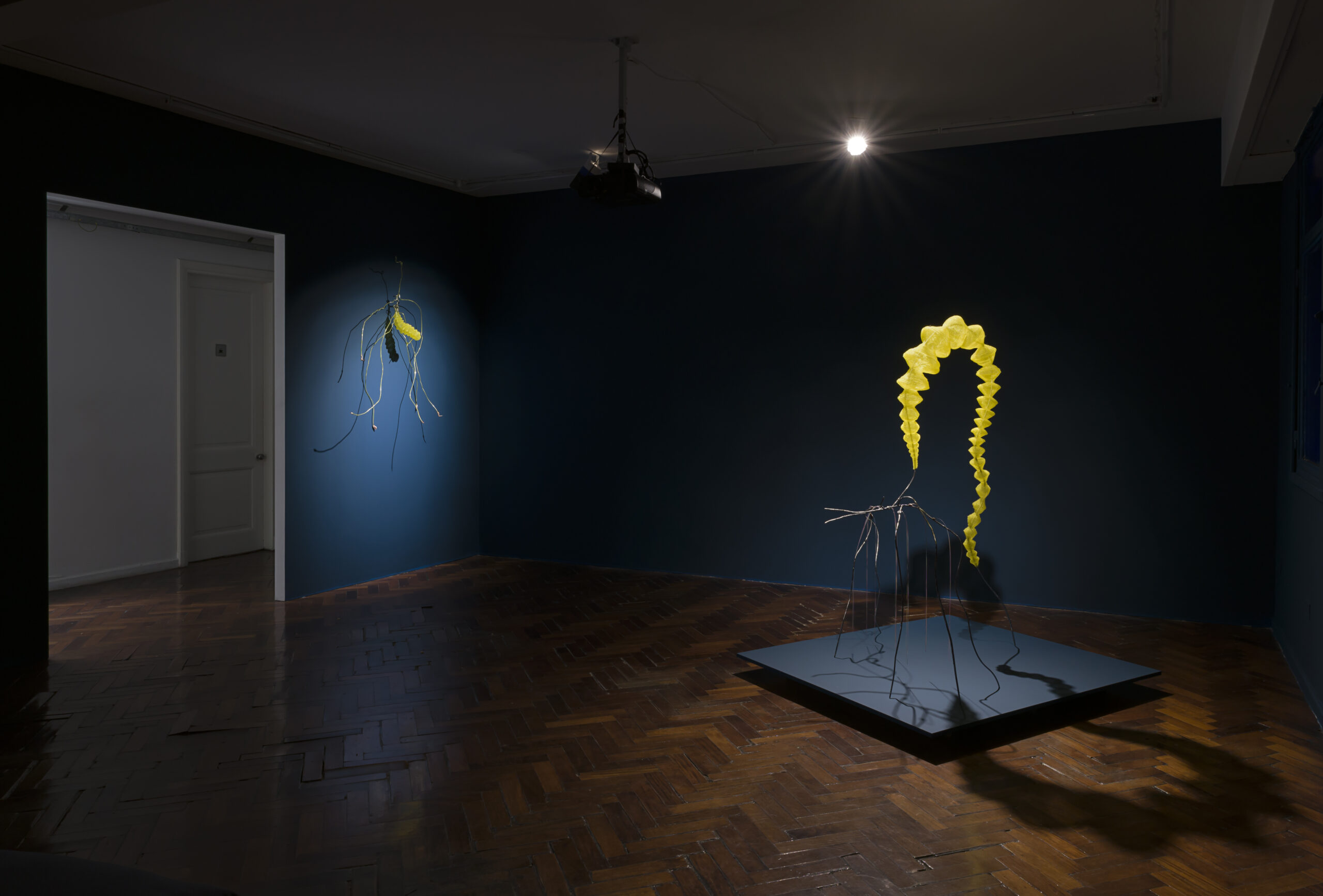
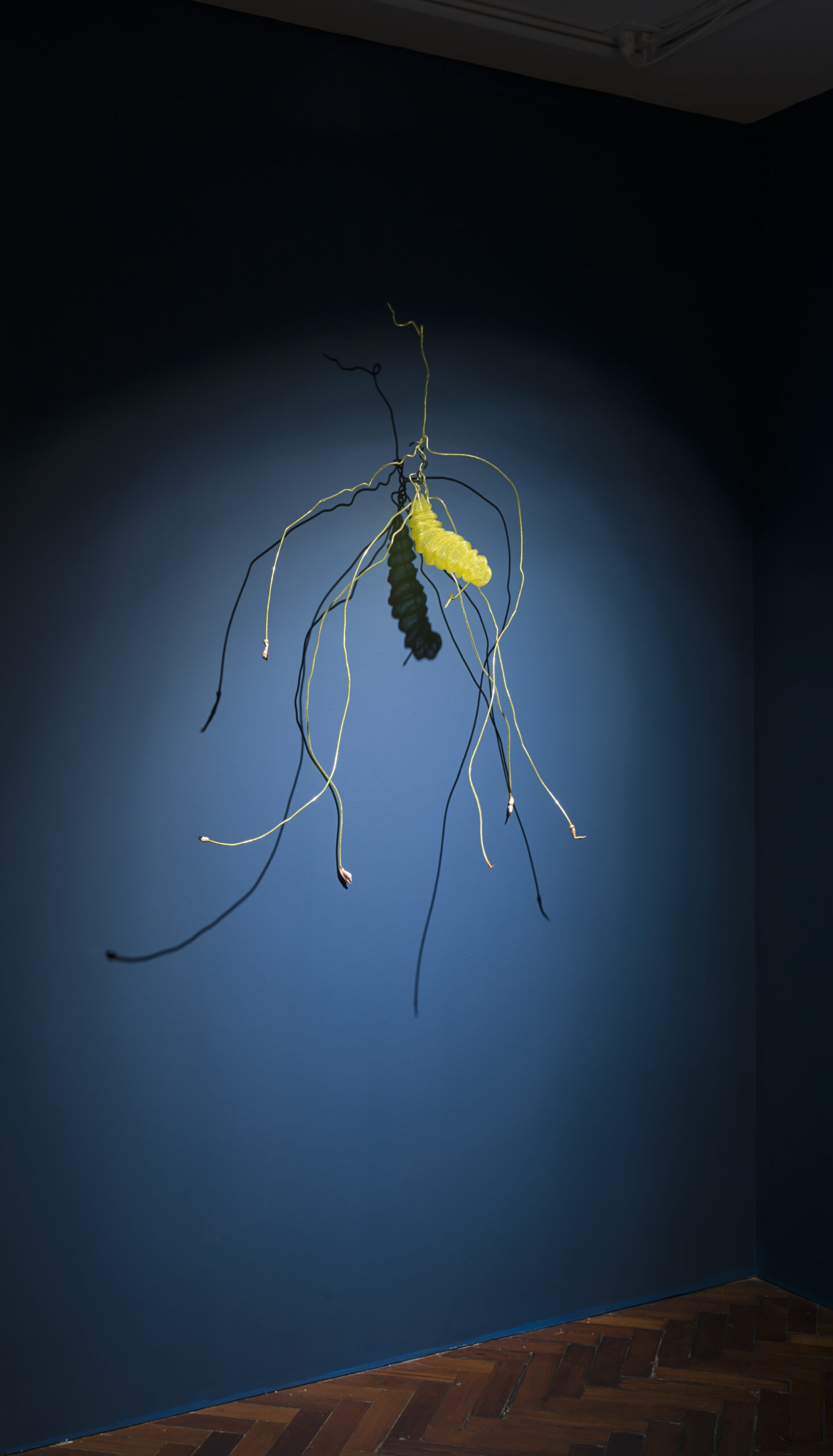
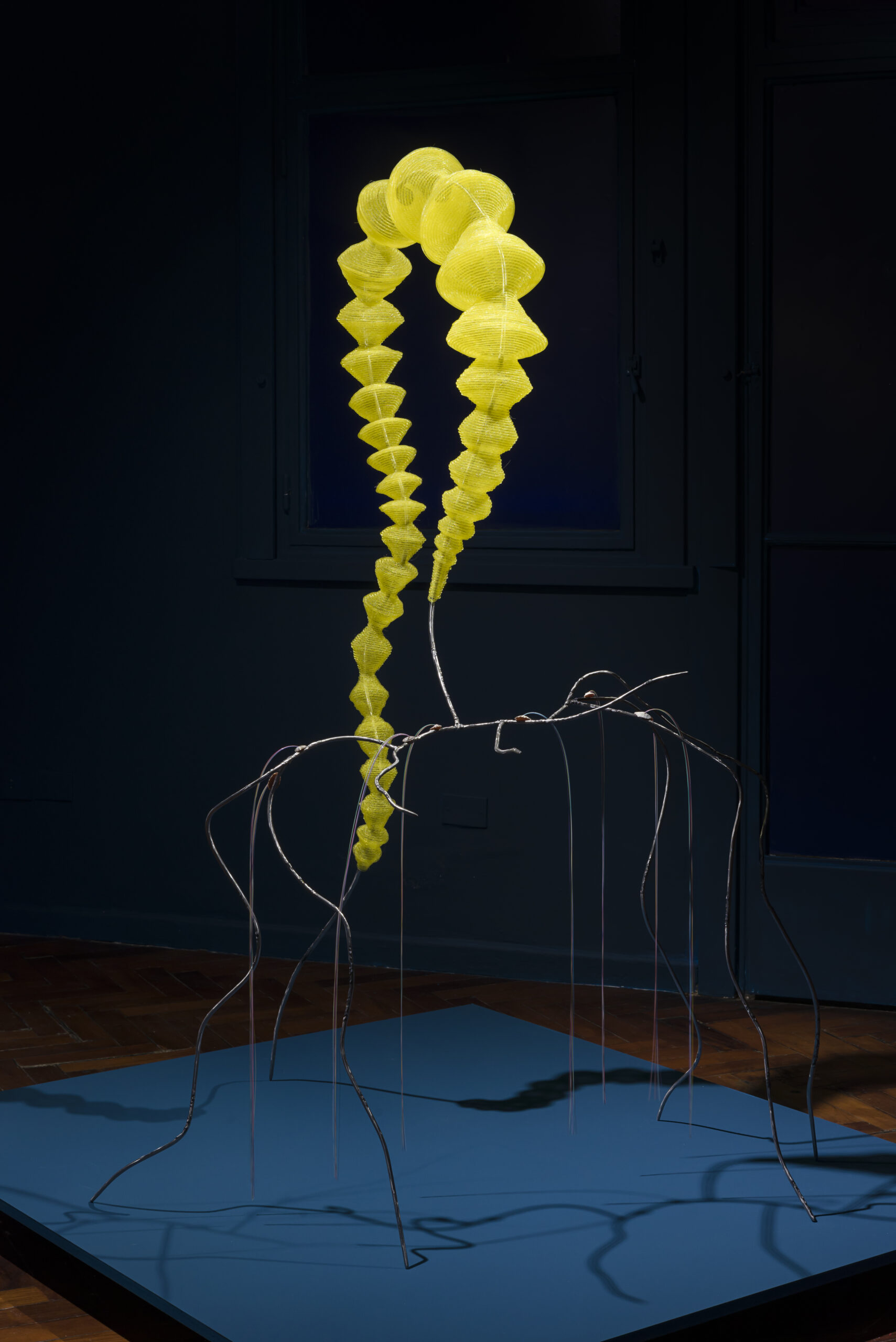
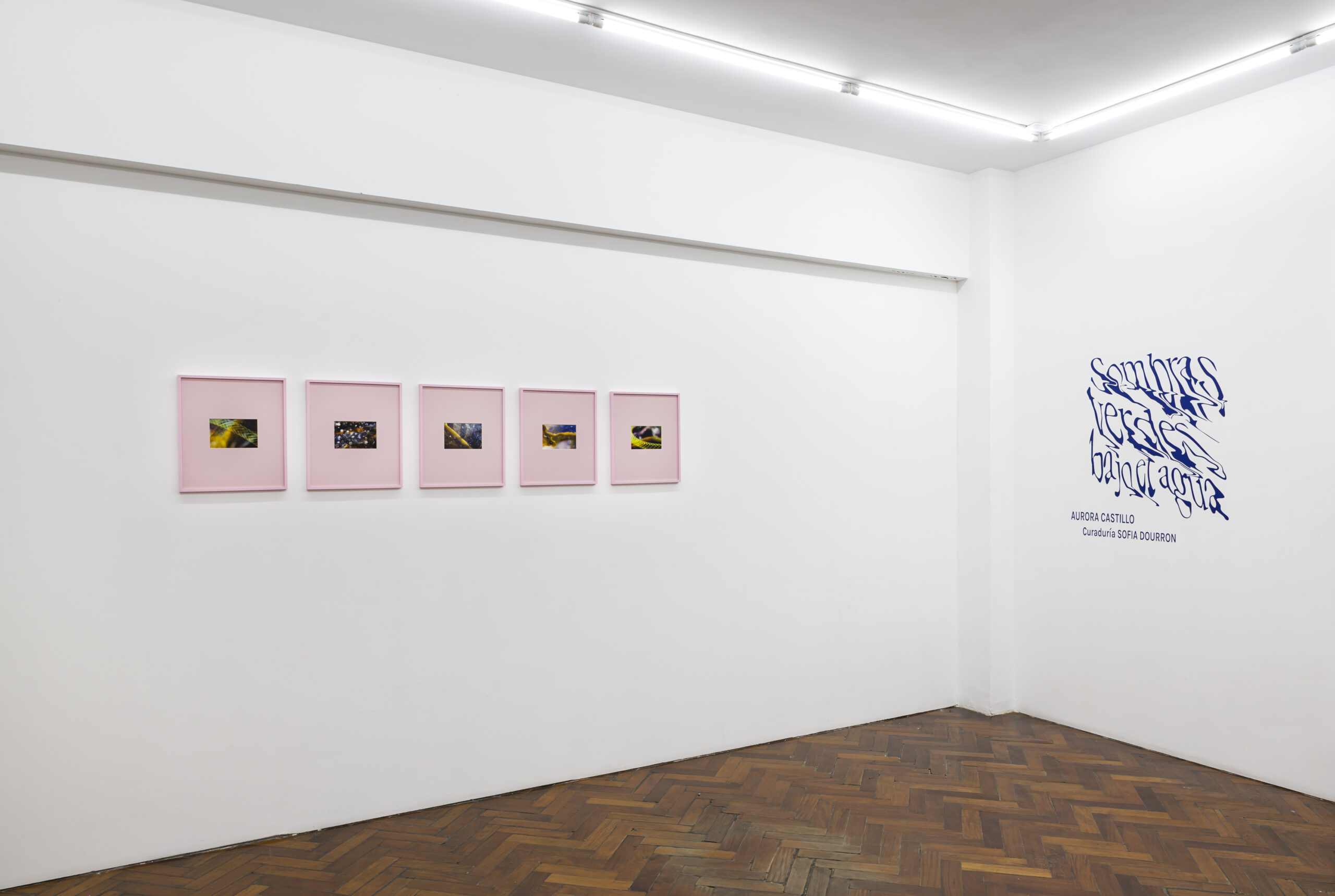
Aurora Castillo has also been looking underwater for some time. She began by looking at samples in a laboratory, before diving off the Chilean coast with a team of scientists. This trajectory—of gaze and body—is intertwined with the genealogy of underwater images initiated by Boutan, and today organizes her research dedicated to the study of aquatic life: its ecologies, languages, communities, and futures in the current planetary crisis. In this exhibition, Aurora uses imaging technologies to interrogate the methodologies of science and industry in the exploration of marine soils and ecosystems. Through video, photography, and sculpture, she reconfigures and manipulates the representations generated by these visual systems to weave a narrative that interweaves scientific research, aquatic poetics, sounds, and abyssal speculation.
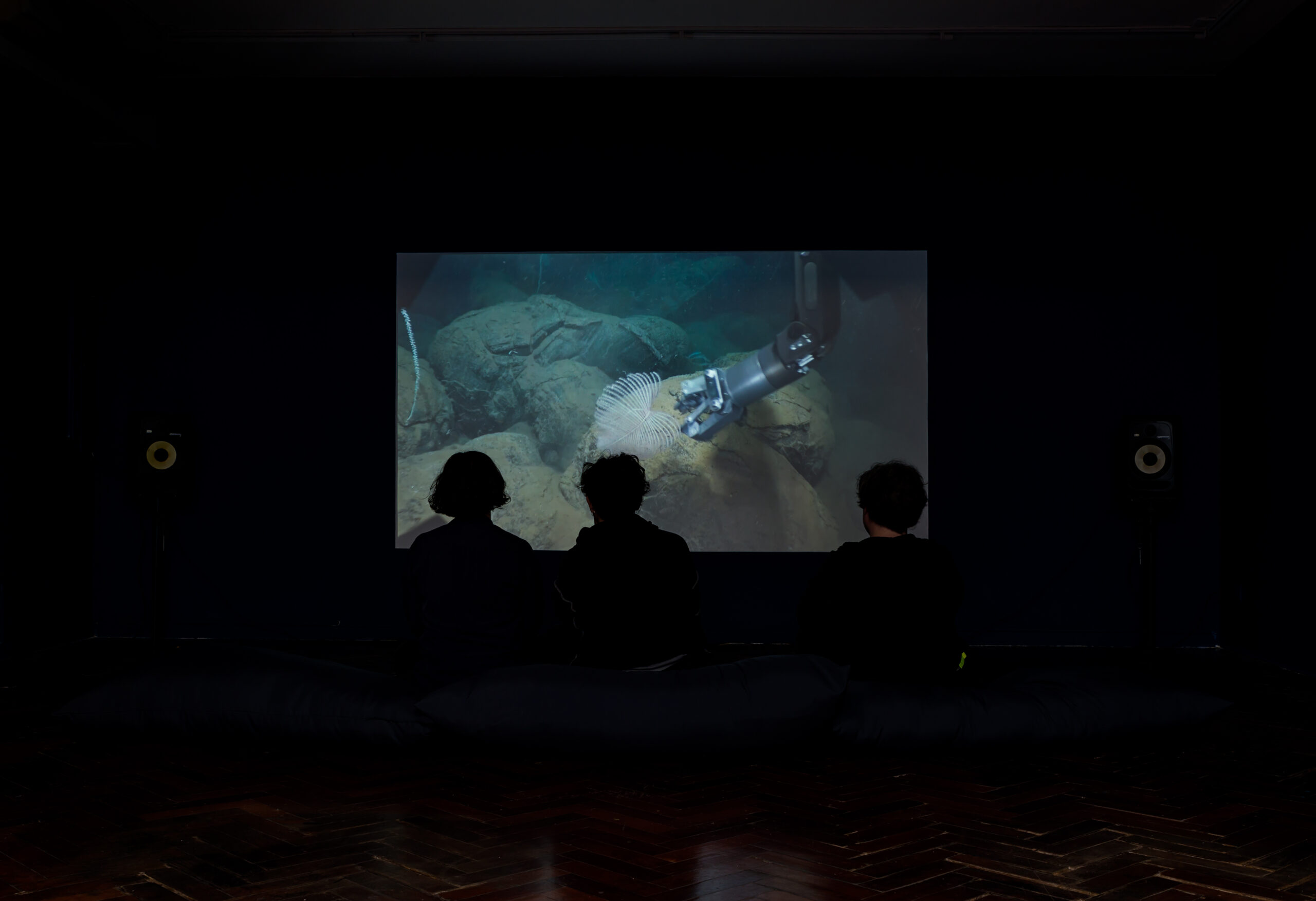
In Picorocos, her first audiovisual work, she explores the forms of perception and communication of the cirripedic crustaceans that give the work its name. These organisms grow and reproduce on rocks, whales, sunken hulls, fiber optic cables, and even offshore extraction platforms. From the stillness of their settlement, they interact with the world through a single opening: an eye-mouth that filters the plankton that feeds them, detects surfaces to adhere to, and perceives changes in light that trigger their shadowy reflection. It also detects the invasion of microplastics floating in the water and the cameras that observe them.
As in her sculptures—where she proposes material assemblages for new forms of existence—in this work, Aurora adopts a murky, deliberately rarefied gaze that seeks more-than-human alternatives to neocolonial ecocide. Her picorocos embody ways of existing, knowing, and communicating that go beyond anthropocentric epistemologies and their representations of aquatic life. They confront us with the deep, dark abyss of the unknown.
If early underwater photographs revealed a tangled ecology later suppressed by corporate marketing, Picorocos recovers and deepens that complexity in the image of aquatic ecosystems that have become industrialized landscapes. The work speculates on the encounters between deep-sea creatures and the technological devices that surround them—cameras, robots, extractive infrastructure—disrupting the image of a serene and peaceful marine flow, essential to sustaining the economic ideology of exploitation.
In Green Shadows Underwater, Aurora draws on techno-scientific images to create a chorus of voices and altered gazes, navigating between the biological record and speculative fiction. In this way, she essays a hydro-politics that reveals symbiotic and supportive encounters (though also toxic and aggressive ones), which demand an urgent redefinition of the material agency of water and our connection to it.
——
Picorocos was produced from recordings taken by the artist in the laboratory of the Coastal Scientific Research Station of the Pontifical Catholic University of Chile, Las Cruces, during her residency there. The underwater images were taken in the Beagle Channel and the Onashaga Channel (Ushuaia) by Dr. Julieta Kaminsky, a CADIC-CONICET researcher specializing in macroalgal ecology whose research is based in Tierra del Fuego, and by Dr. Mariano Rodríguez (Argentina Submarina), in dialogue with the artist. The time-lapse sequences were captured in Ushuaia by the research team consisting of Piotr Balazy, María Bagur, Julieta Kaminsky, Piotr Kuklinski, Gustavo Lovrich, Mariano Rodriguez, and Emilia Trudnowska. The work also includes deep-sea exploration images from the online repository of the Ocean Networks Canada ocean observatory, part of the University of Victoria (UVic).
The sound was created by sound artist Ailín Grad.