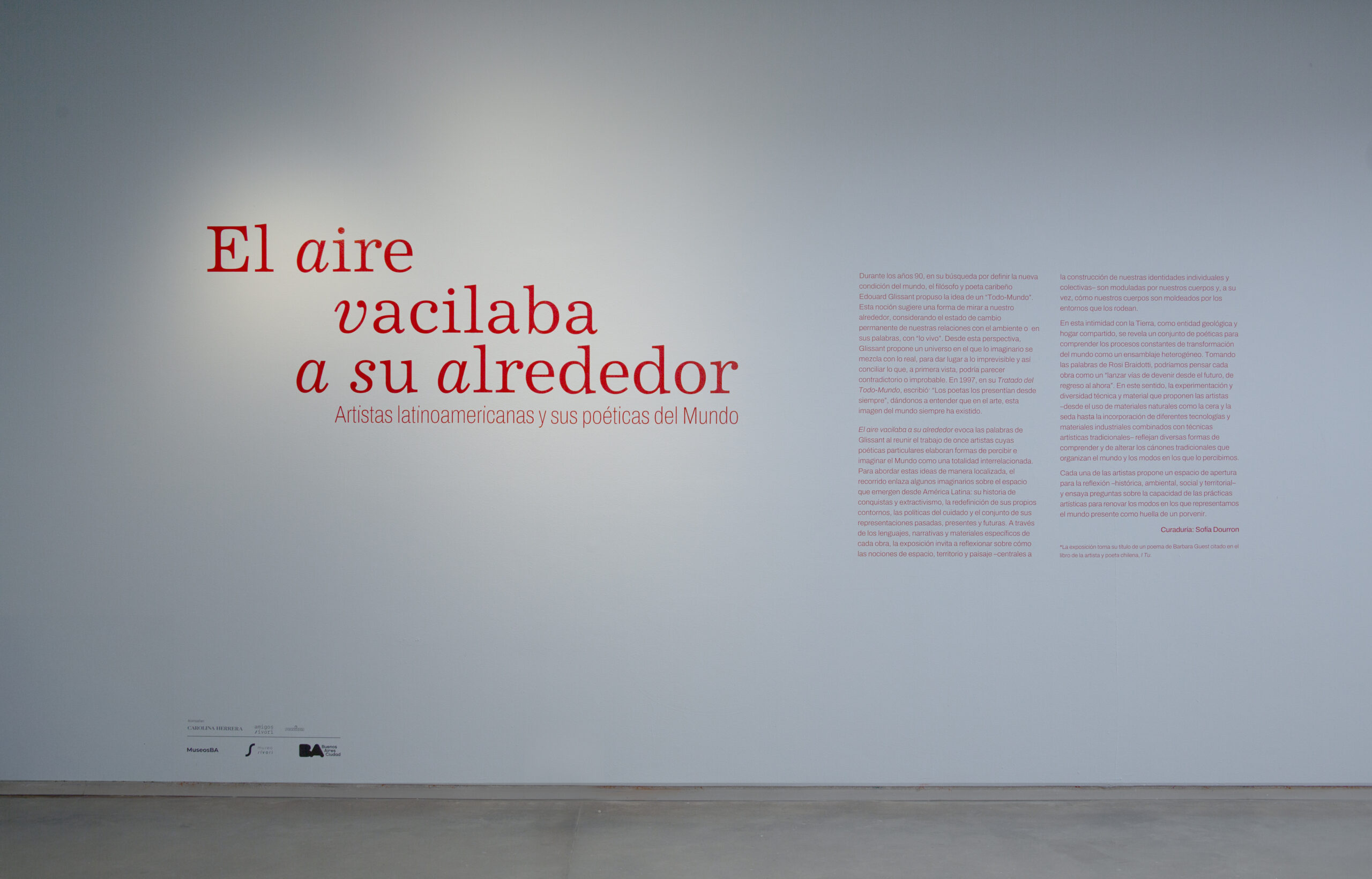
Latin American Women Artists and Their Poetics of the World
During the 1990s, in his search to define the new condition of the world, Caribbean philosopher and poet Édouard Glissant proposed the idea of a “Whole-World” (Tout-Monde). This notion suggests a way of looking at our surroundings that takes into account the state of permanent change in our relationships with the environment—or, in his words, with “the living.” From this perspective, Glissant envisions a universe in which the imaginary blends with the real, giving rise to the unpredictable and thus reconciling what, at first glance, might appear contradictory or improbable. In 1997, in his Treatise on the Whole-World, he wrote: “Poets had always sensed it,” implying that in art, this image of the world has always existed.
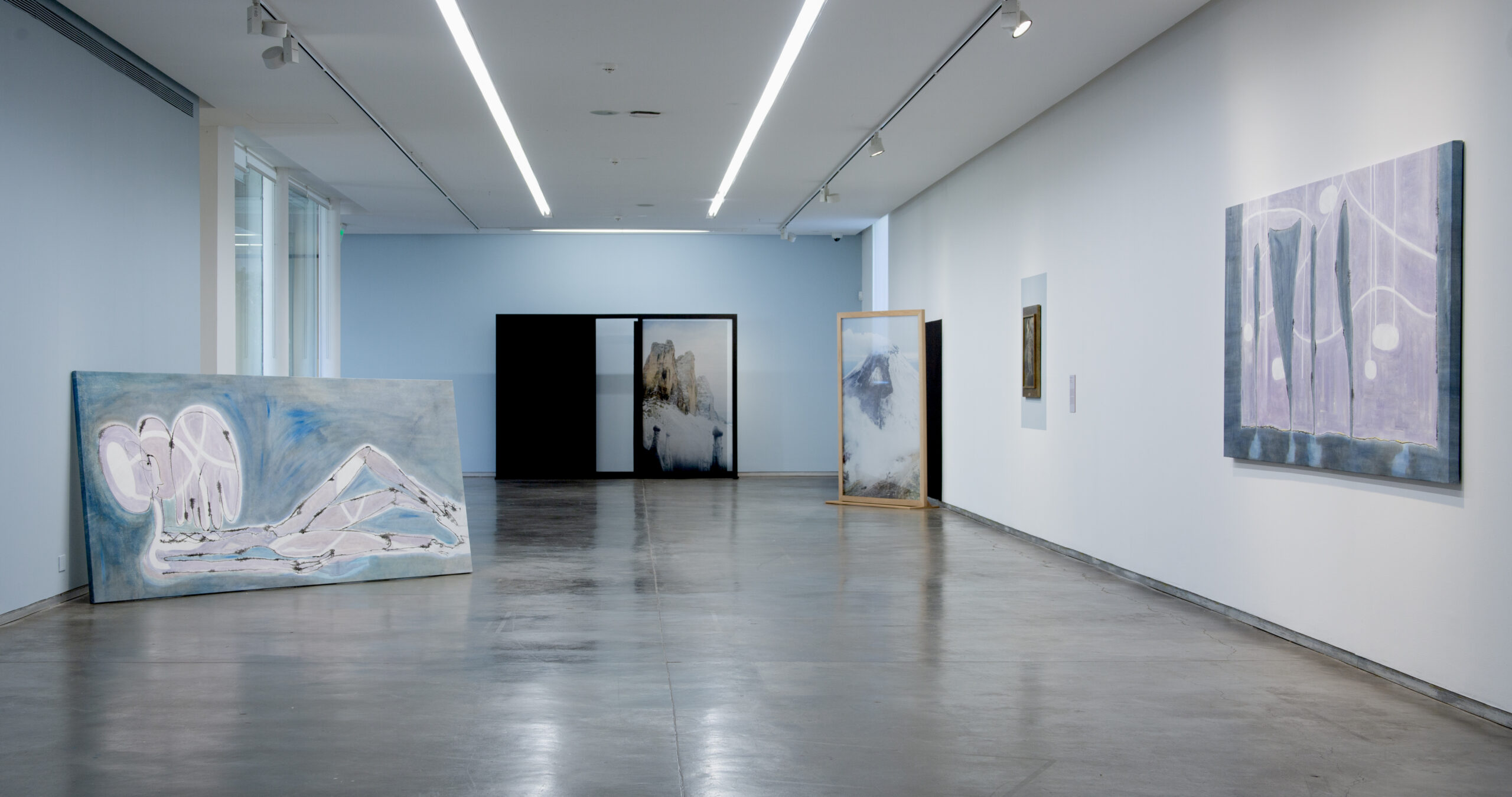
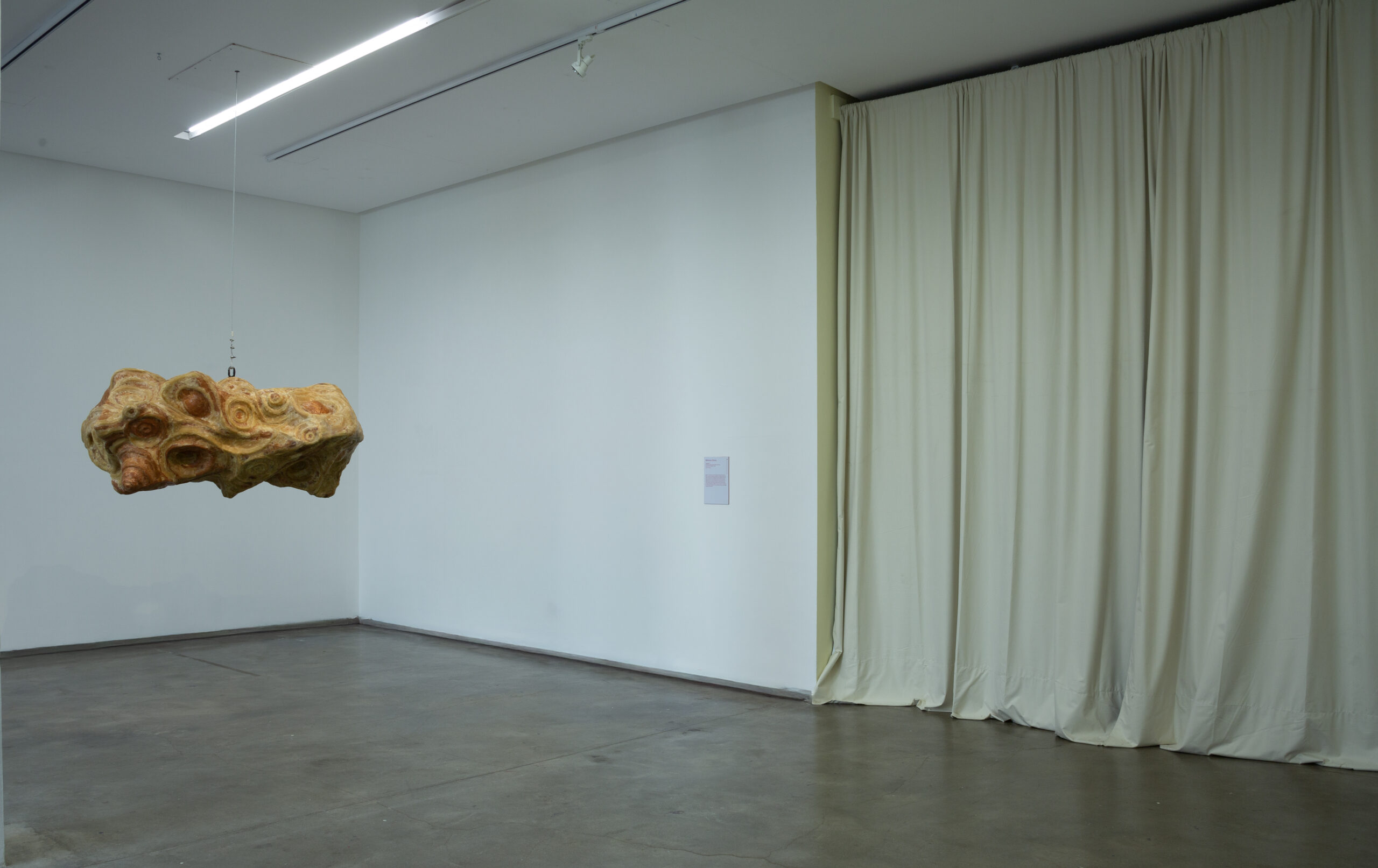
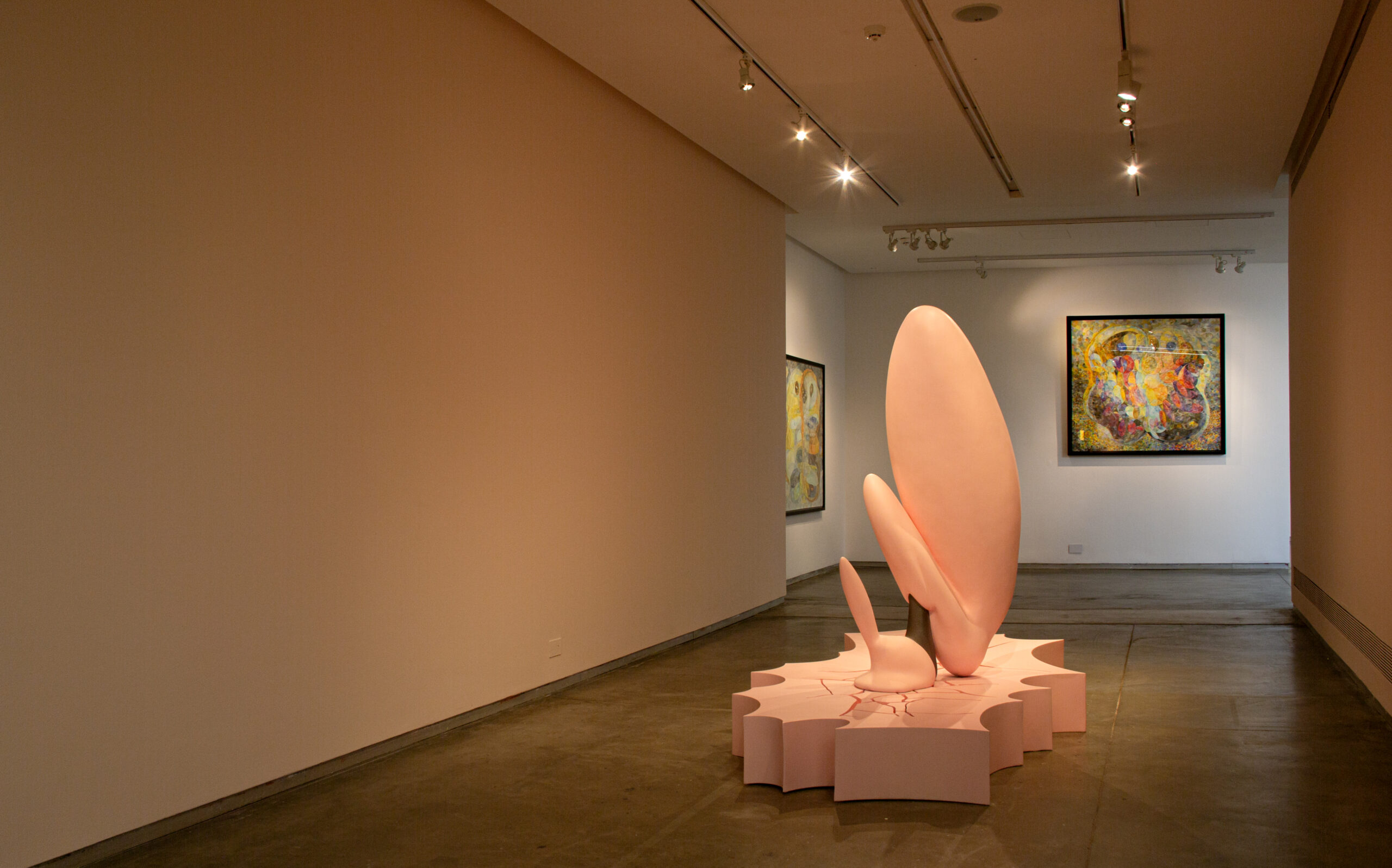
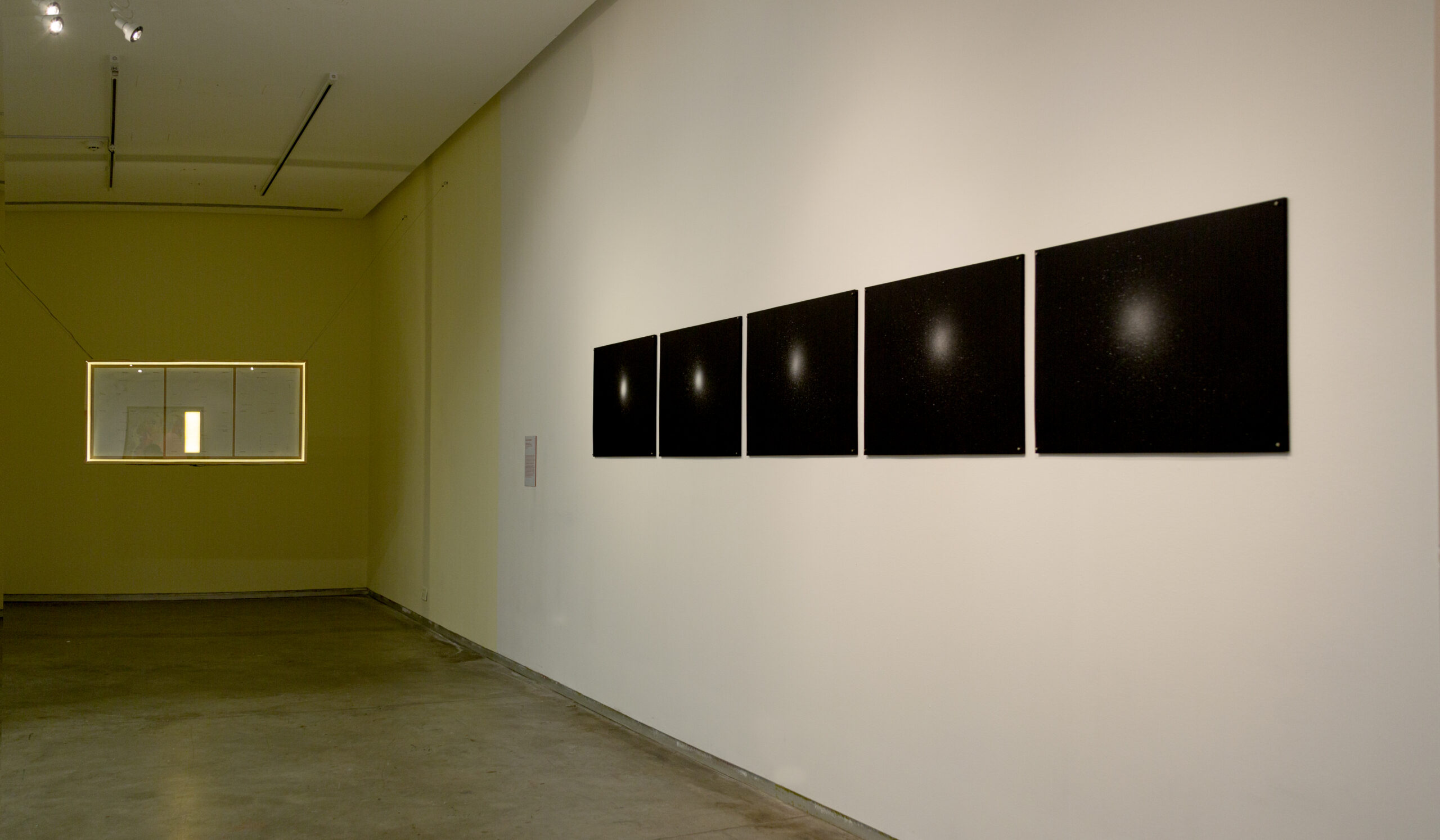
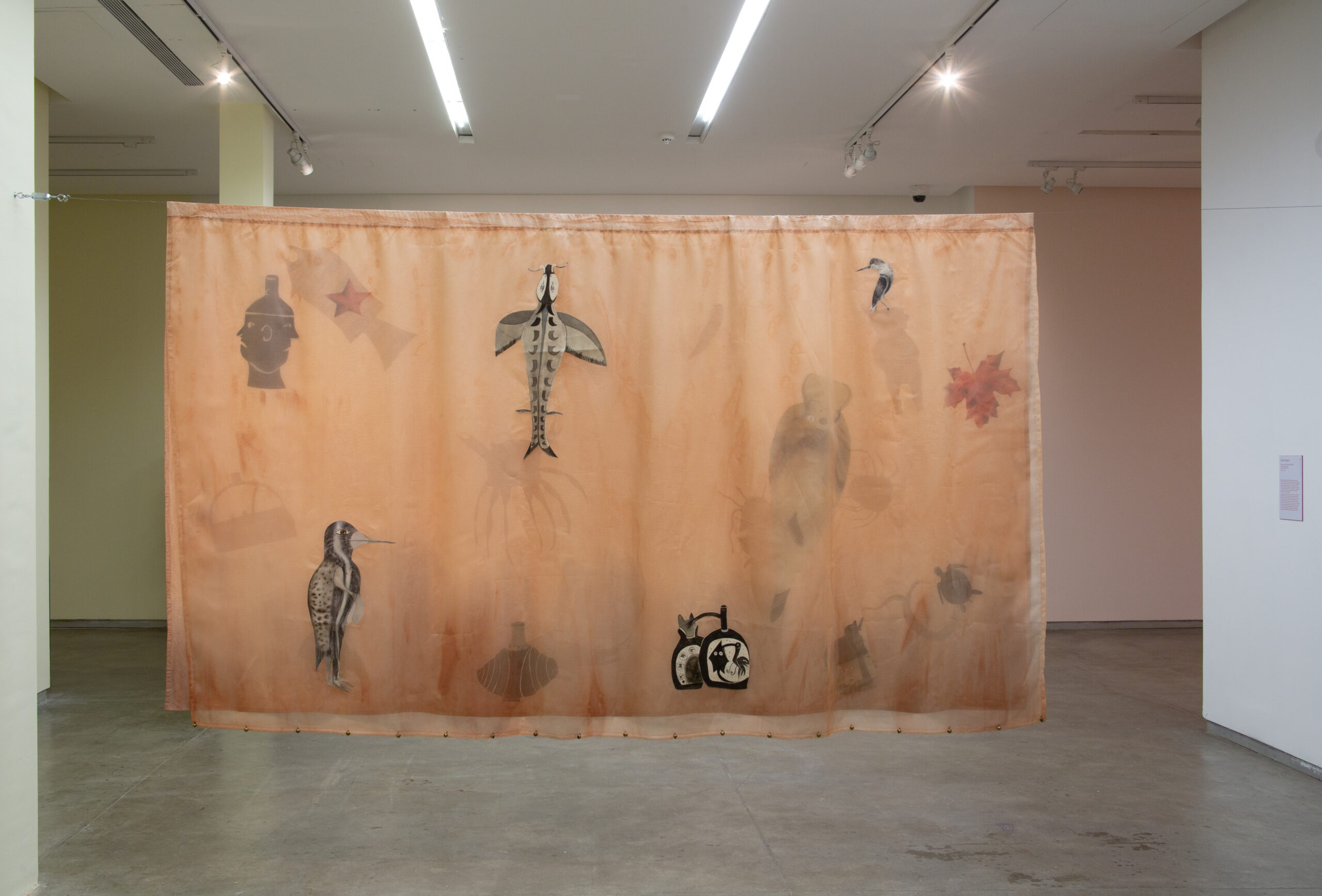
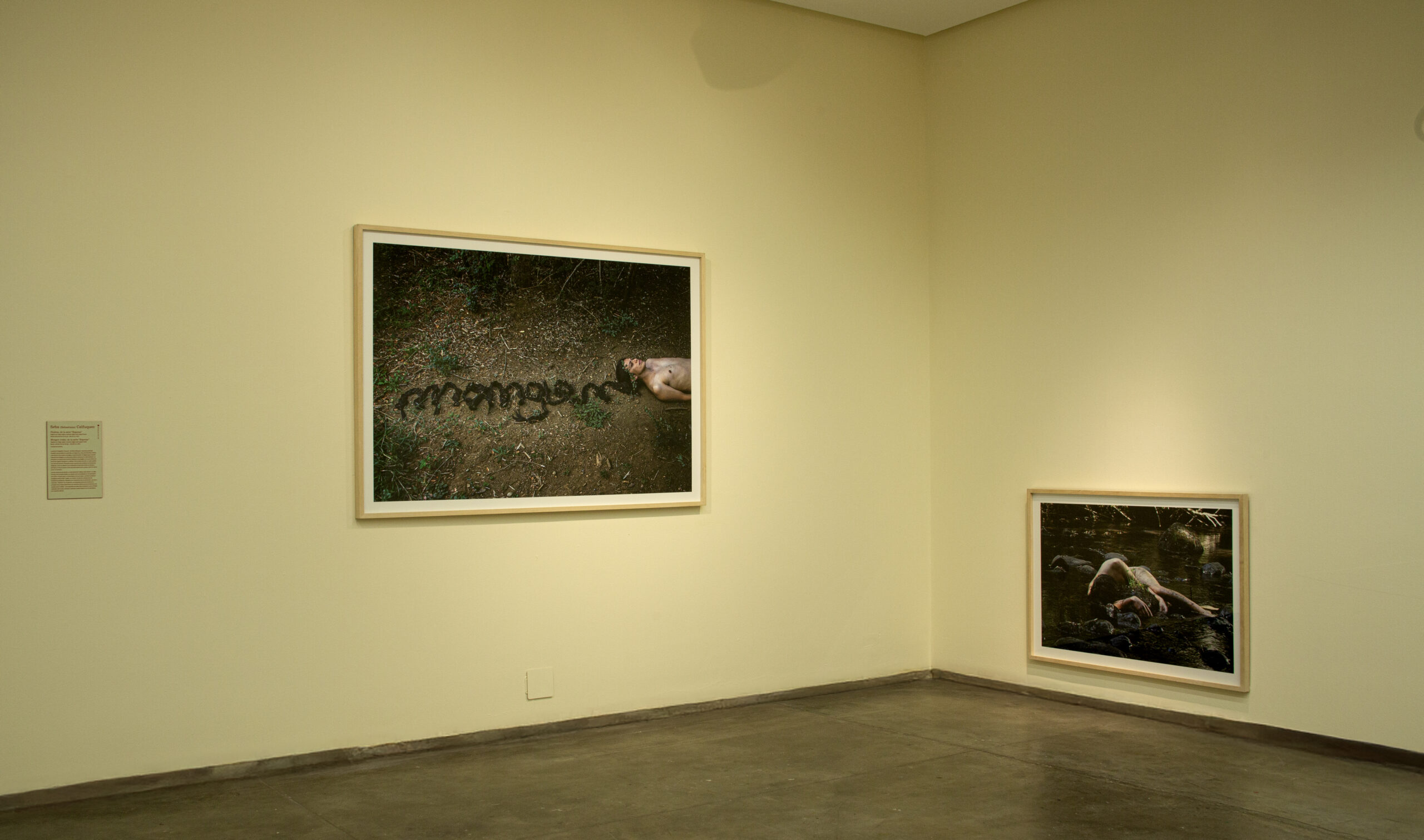
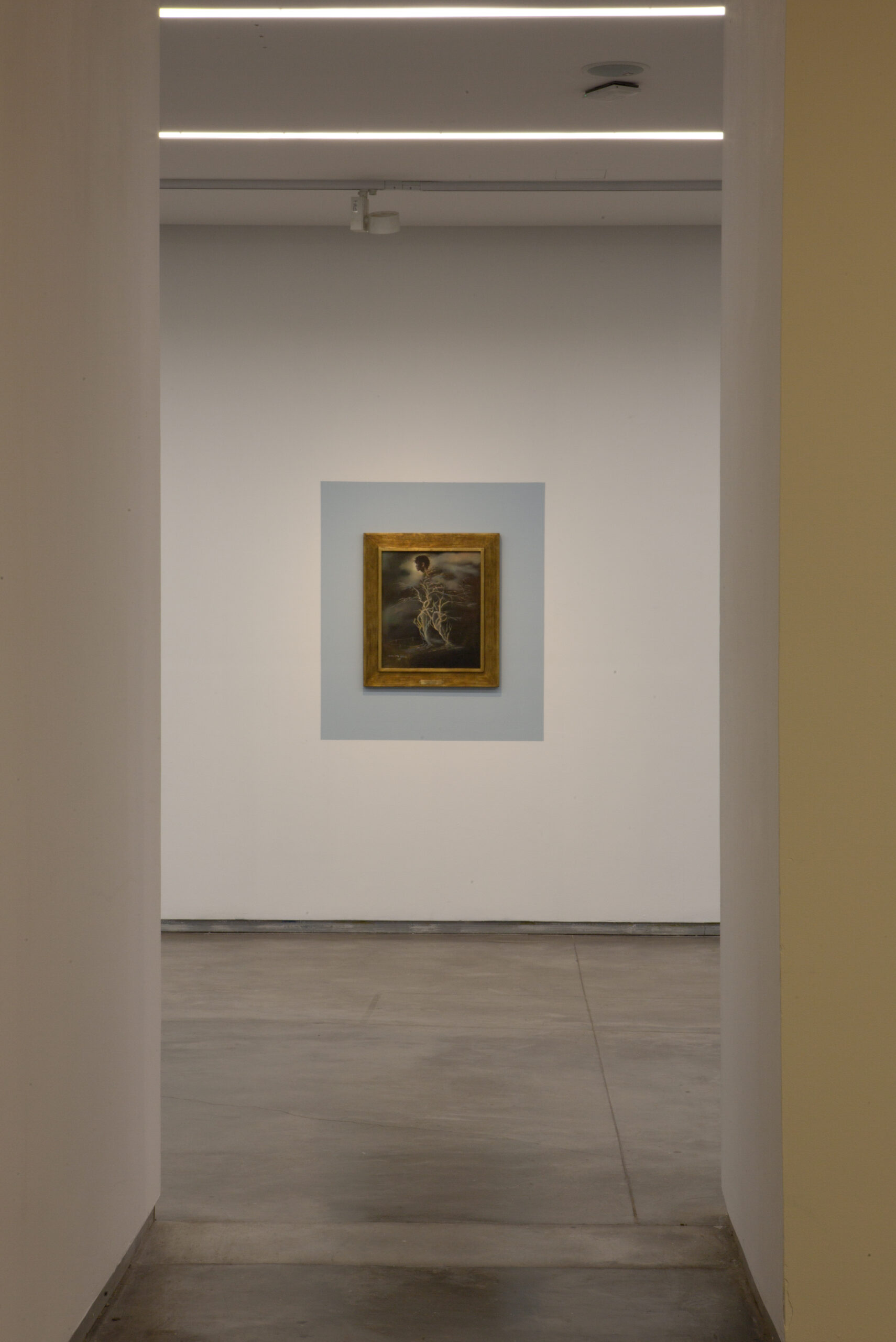
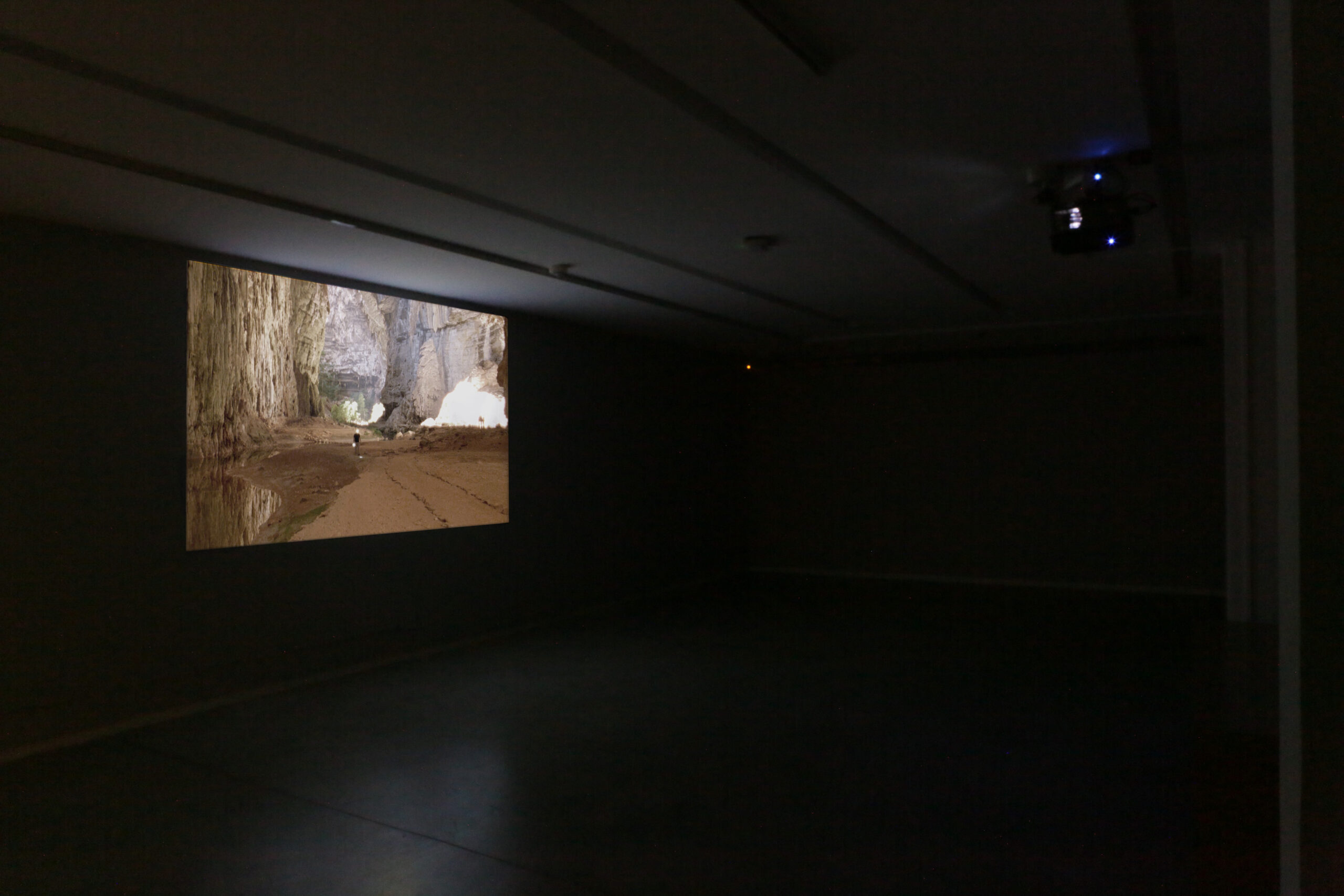
The Air Wavered Around Them evokes Glissant’s words by bringing together the work of eleven artists whose particular poetics elaborate ways of perceiving and imagining the World as an interconnected whole. To address these ideas in a localized manner, the exhibition path links together imaginaries of space that emerge from Latin America: its history of conquest and extractivism, the redefinition of its own contours, politics of care, and the set of its past, present, and future representations. Through the specific languages, narratives, and materials of each work, the exhibition invites reflection on how notions of space, territory, and landscape—central to the construction of our individual and collective identities—are shaped by our bodies and, in turn, how our bodies are molded by the environments that surround them.
Within this intimacy with the Earth, understood as both a geological entity and a shared home, a set of poetics is revealed for understanding the constant processes of transformation of the world as a heterogeneous assemblage. Drawing on the words of Rosi Braidotti, we might think of each work as “casting pathways of becoming from the future back to the now.” In this sense, the experimentation and technical and material diversity proposed by the artists—from the use of natural materials such as wax and silk to the incorporation of different technologies and industrial materials combined with traditional artistic techniques—reflect multiple ways of understanding and disrupting the traditional canons that organize the world and the ways in which we perceive it.
Each artist proposes a space of openness for reflection—historical, environmental, social, and territorial—and poses questions about the capacity of artistic practices to renew the ways in which we represent the present world as the trace of a future yet to come.