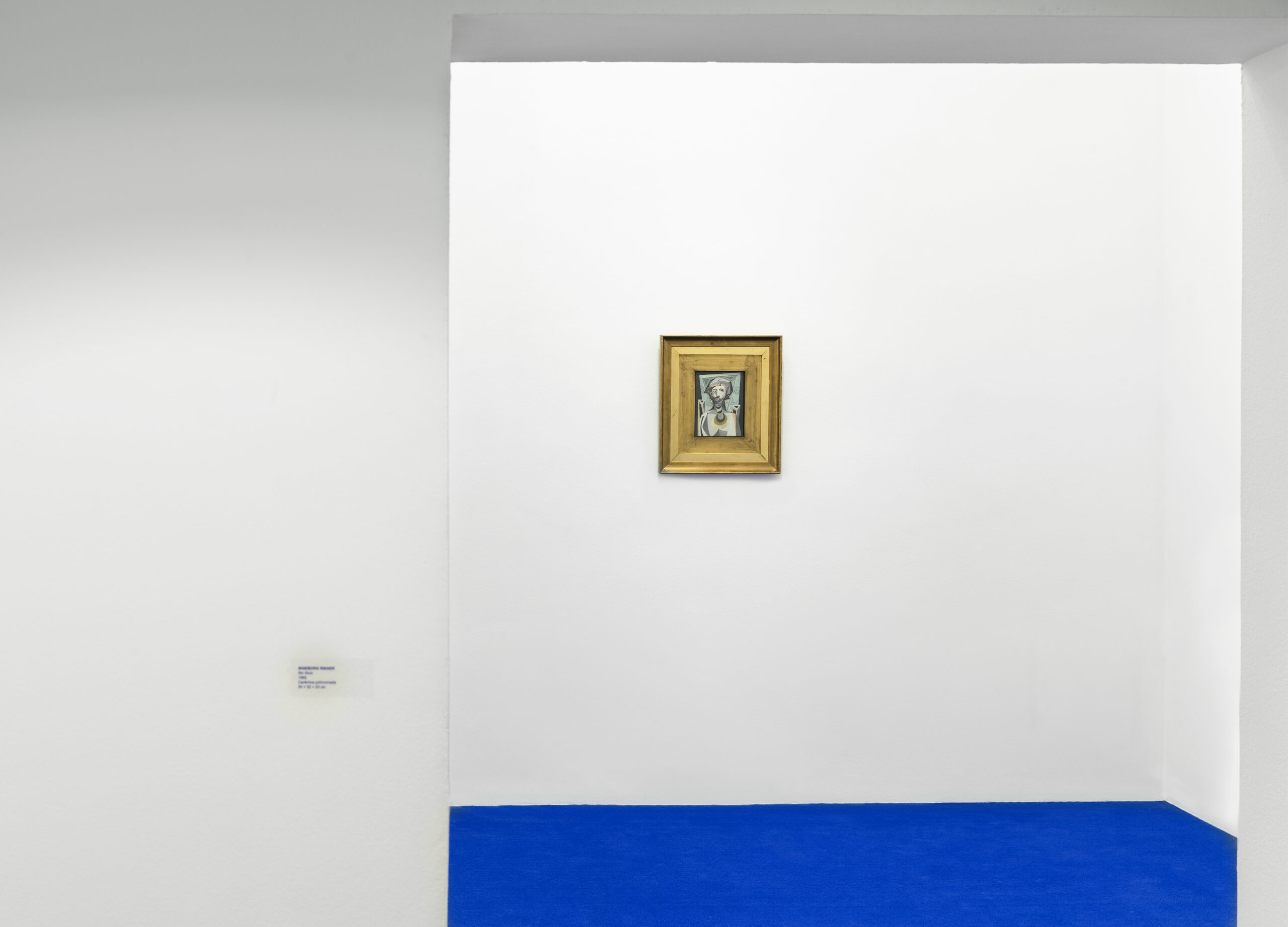
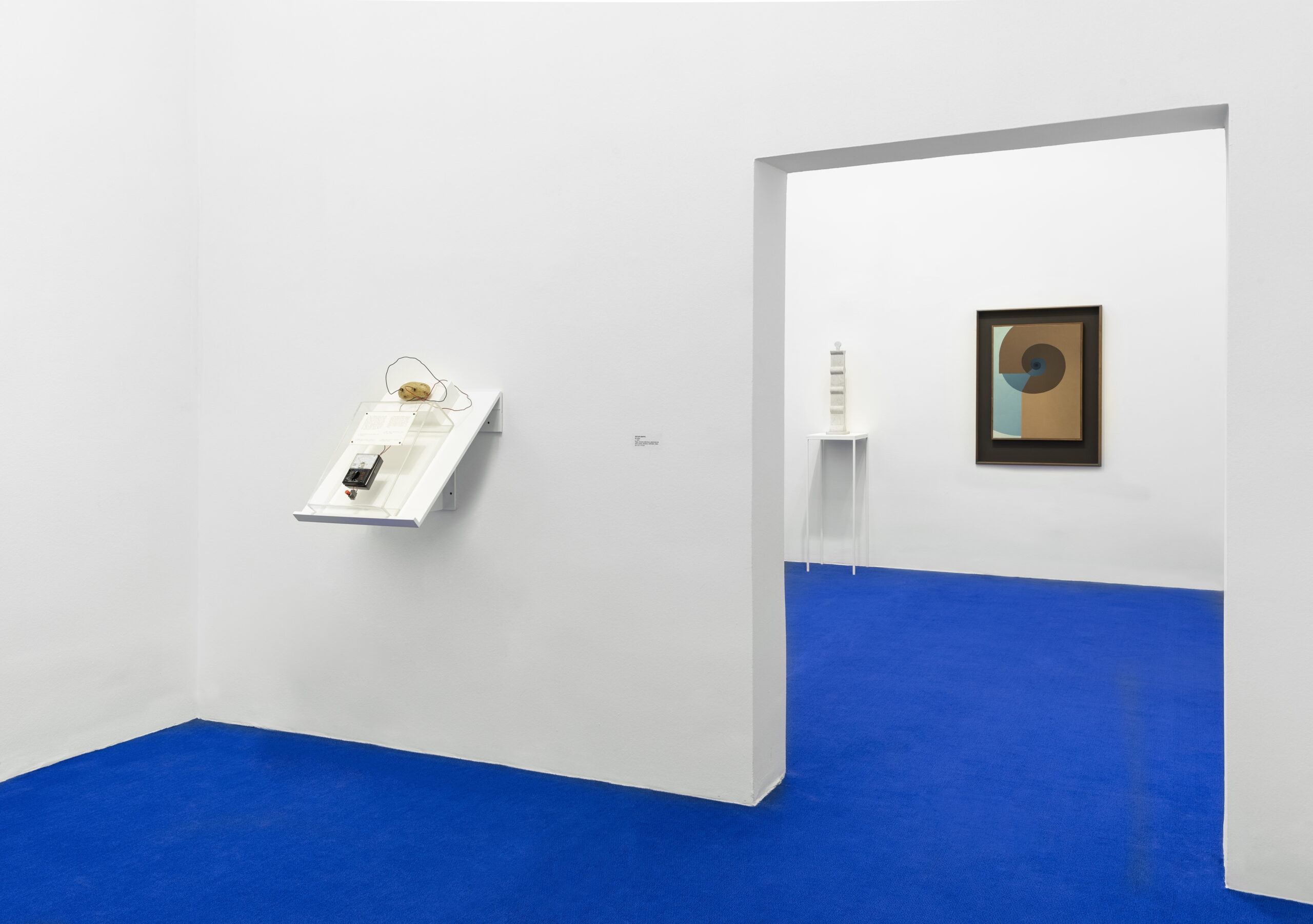
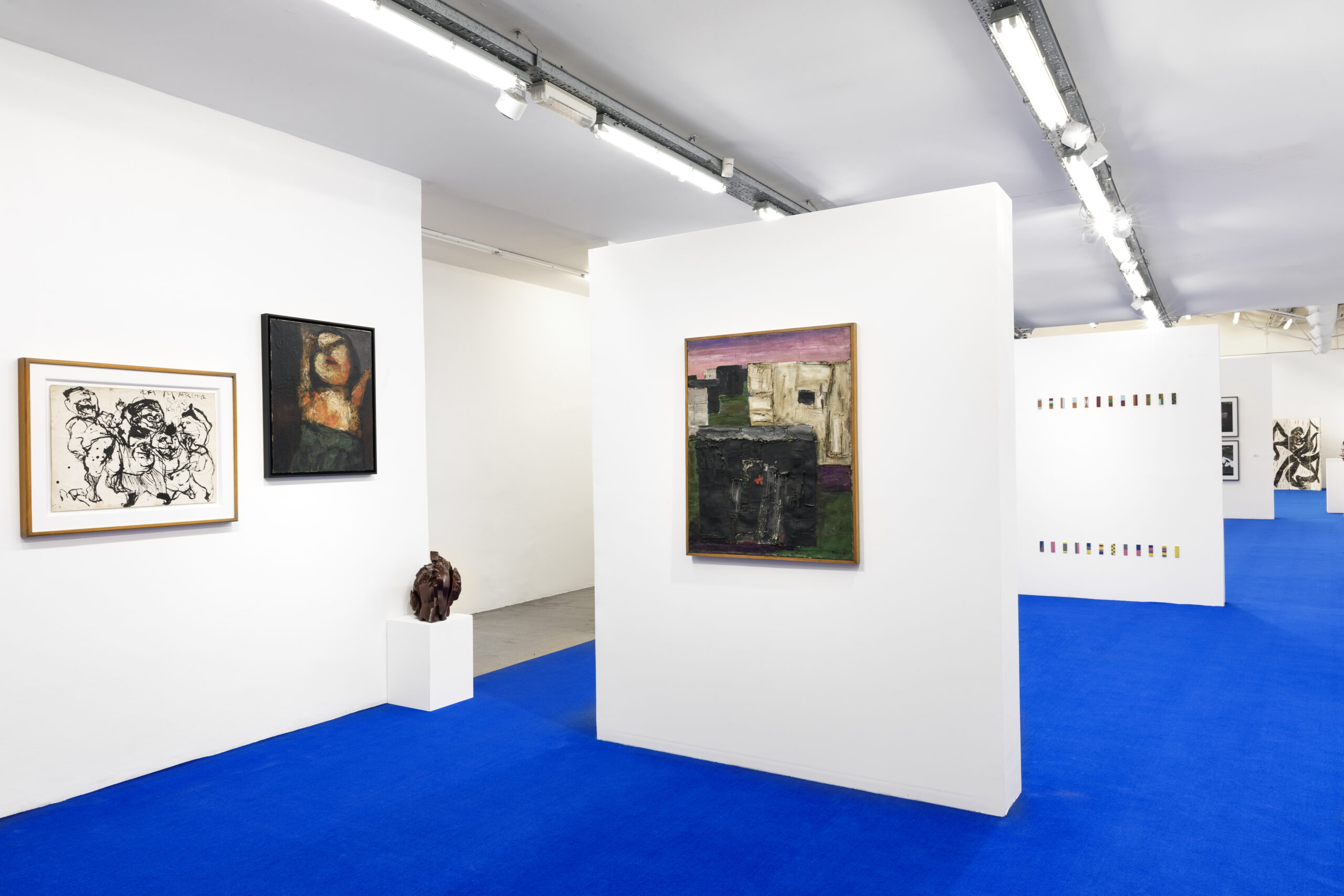
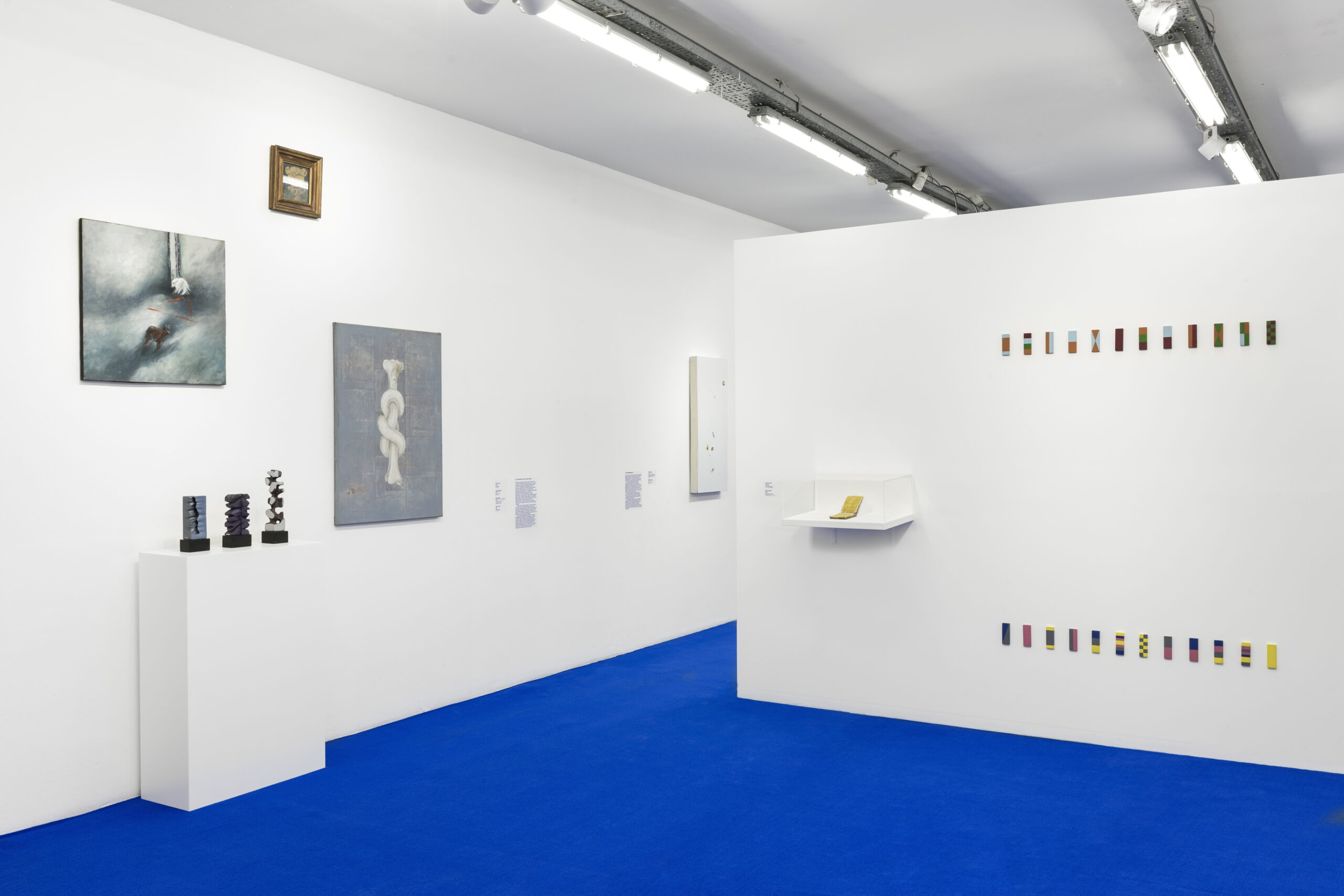
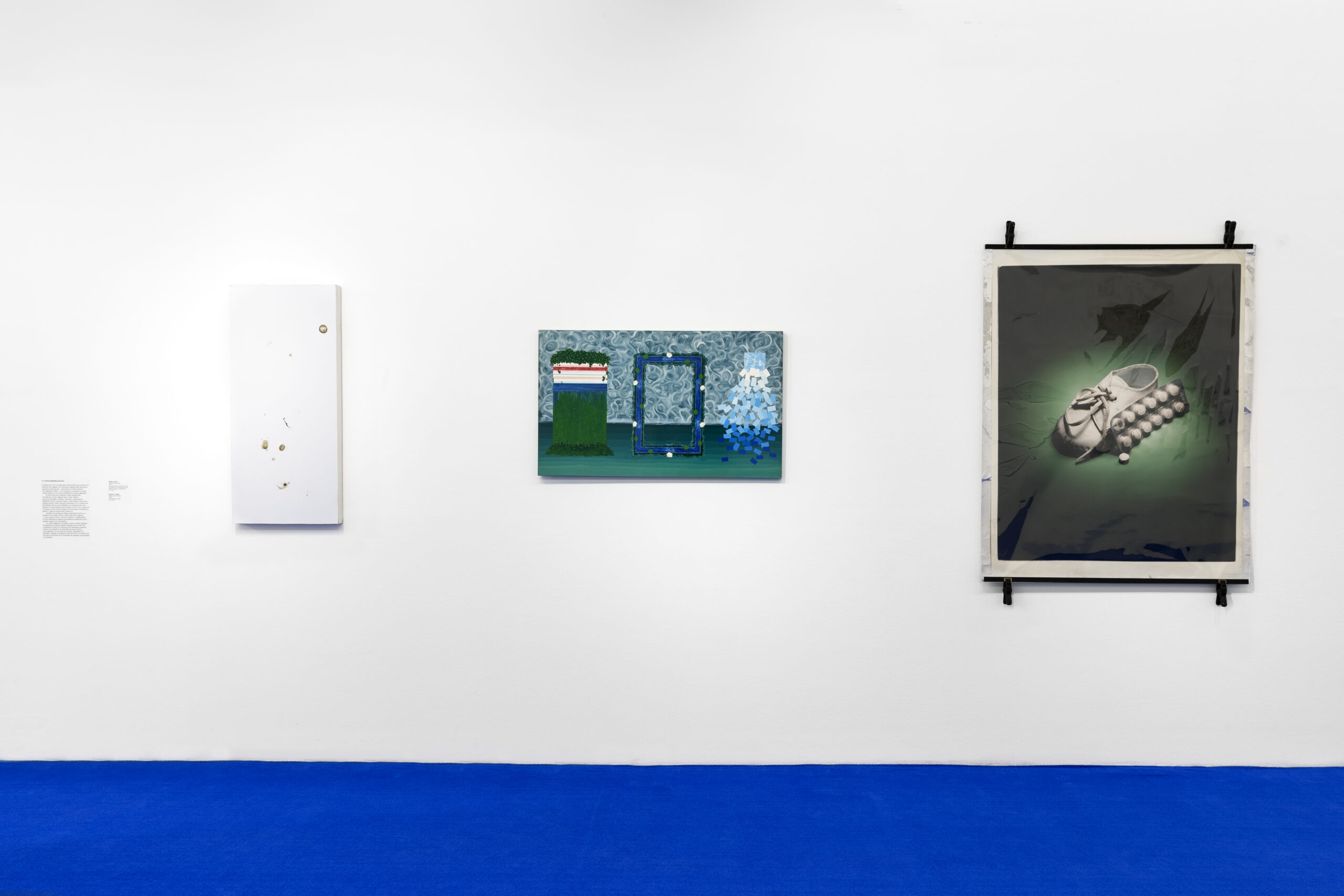
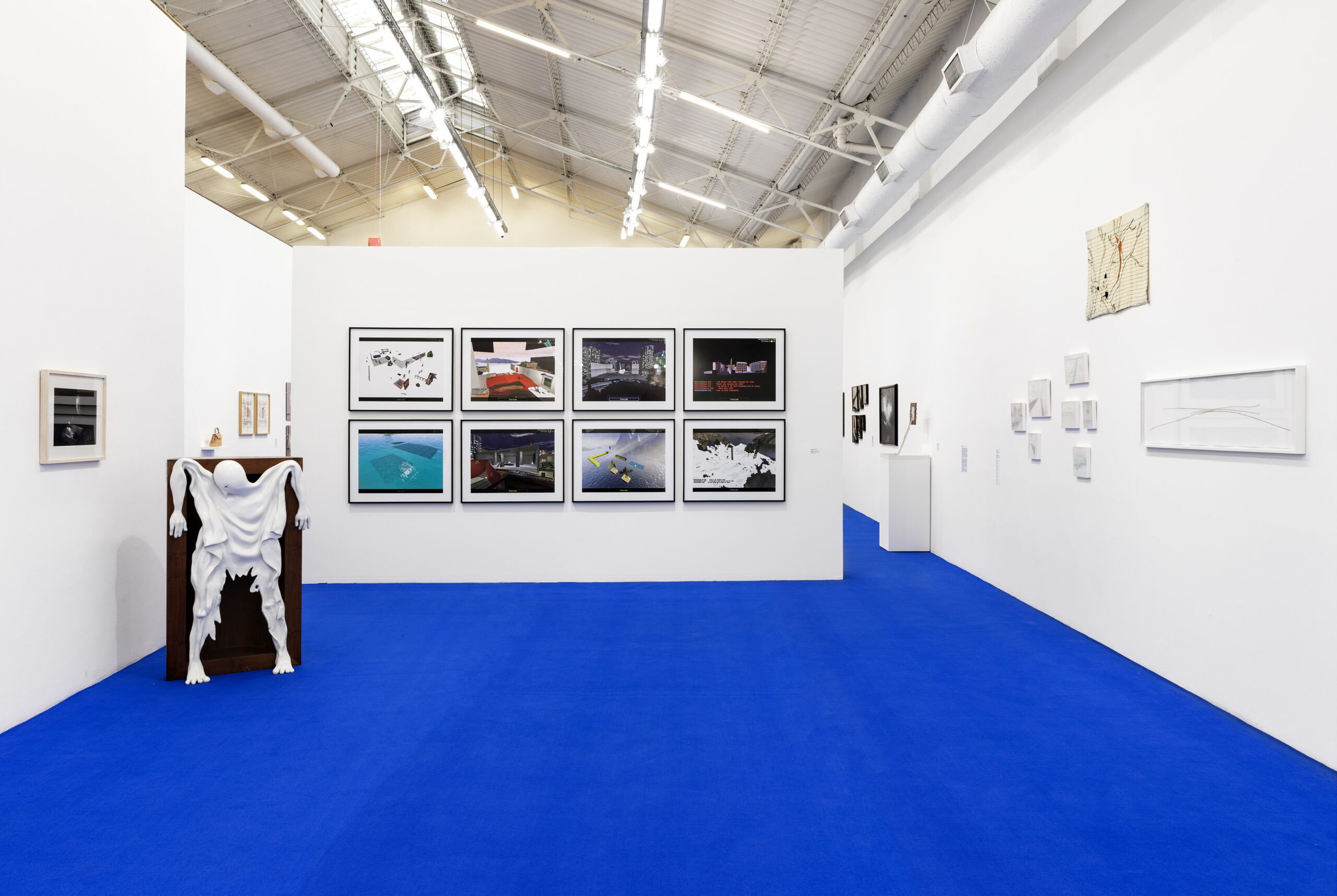
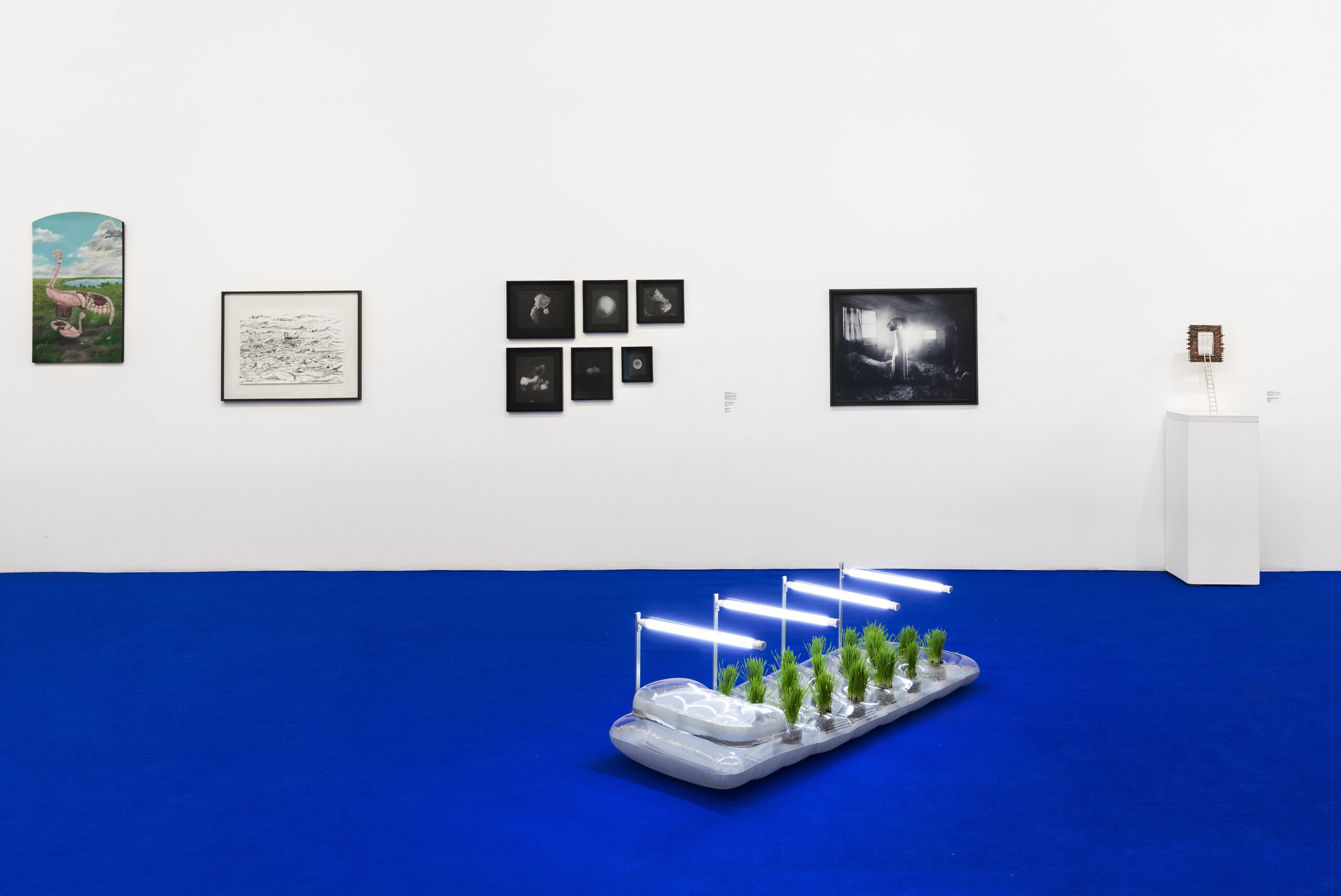
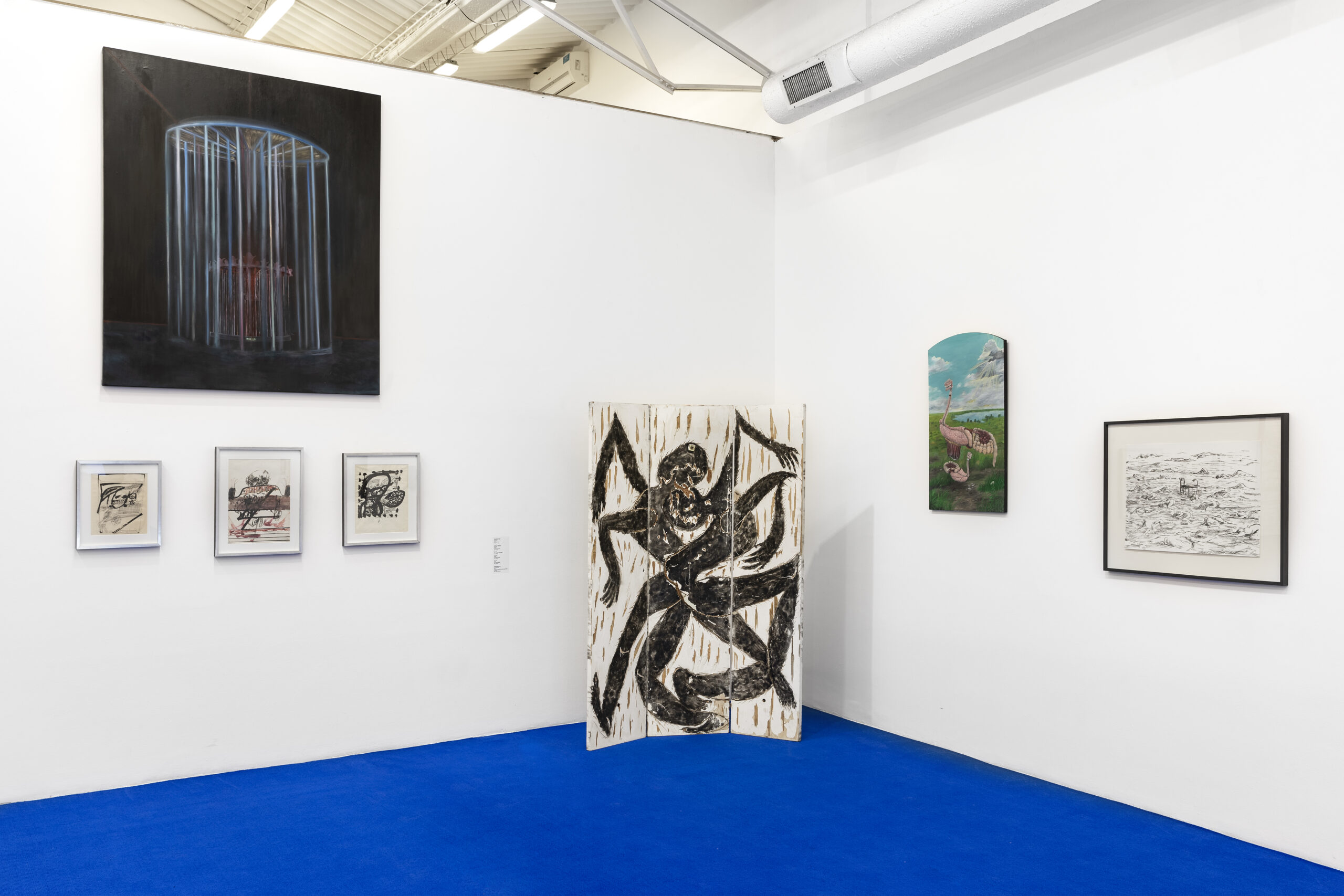
Throughout his life, Federico Manuel Peralta Ramos dedicated striking phrases to the Ruth Benzacar Gallery. “Mystery of Economy,” written in black letters on a white background, hung in the management office on Florida Street for almost three decades and is probably the most iconic of them. Less well known, though no less emblematic, is the phrase that gives this exhibition its title and appears on the back of a portrait of the artist: “For Ruth, energy and optimism for a lifetime. Federico Manuel, planet Earth, January 1985.” For forty years, the photograph and its prophecy remained filed away among opening photos, price lists, catalogs, and press notes. It resurfaced—by chance or by the design of the divinities of art—amid preparations for the gallery’s 60th anniversary celebrations, and in recent months it has become an oracular image.
This exhibition takes that phrase as a quasi-prophetic title in an attempt to transform what might otherwise be a nostalgic narration of the past into a hopeful augury for the future. Energy and Optimism for a Lifetime, the exhibition, weaves—toward that end—soft chronologies and narratives that are as historical as they are affective. It seeks to create a journey through the biography of Ruth Benzacar Galería de Arte that reflects its winding trajectory, from the house-gallery governed by affection and intuition to the construction of a consolidated institution, though one still infused today with romanticism and youth.
“It does not claim to be an exhaustive testimony. It is merely about rescuing a symbol,” Ruth wrote in 1983 when, with the return of democracy, she inaugurated the Florida Street venue with an exhibition that celebrated the rebellious and daring spirit of the early twentieth-century avant-gardes. Today, her phrase accompanies us once again. Thus, without exhaustive pretensions, but rather celebratory and providential ones, this exhibition is composed of fragments that interlace the history of the gallery with the history of Argentine art (with its encounters and misencounters), outlining some possible lines of flight toward the future.
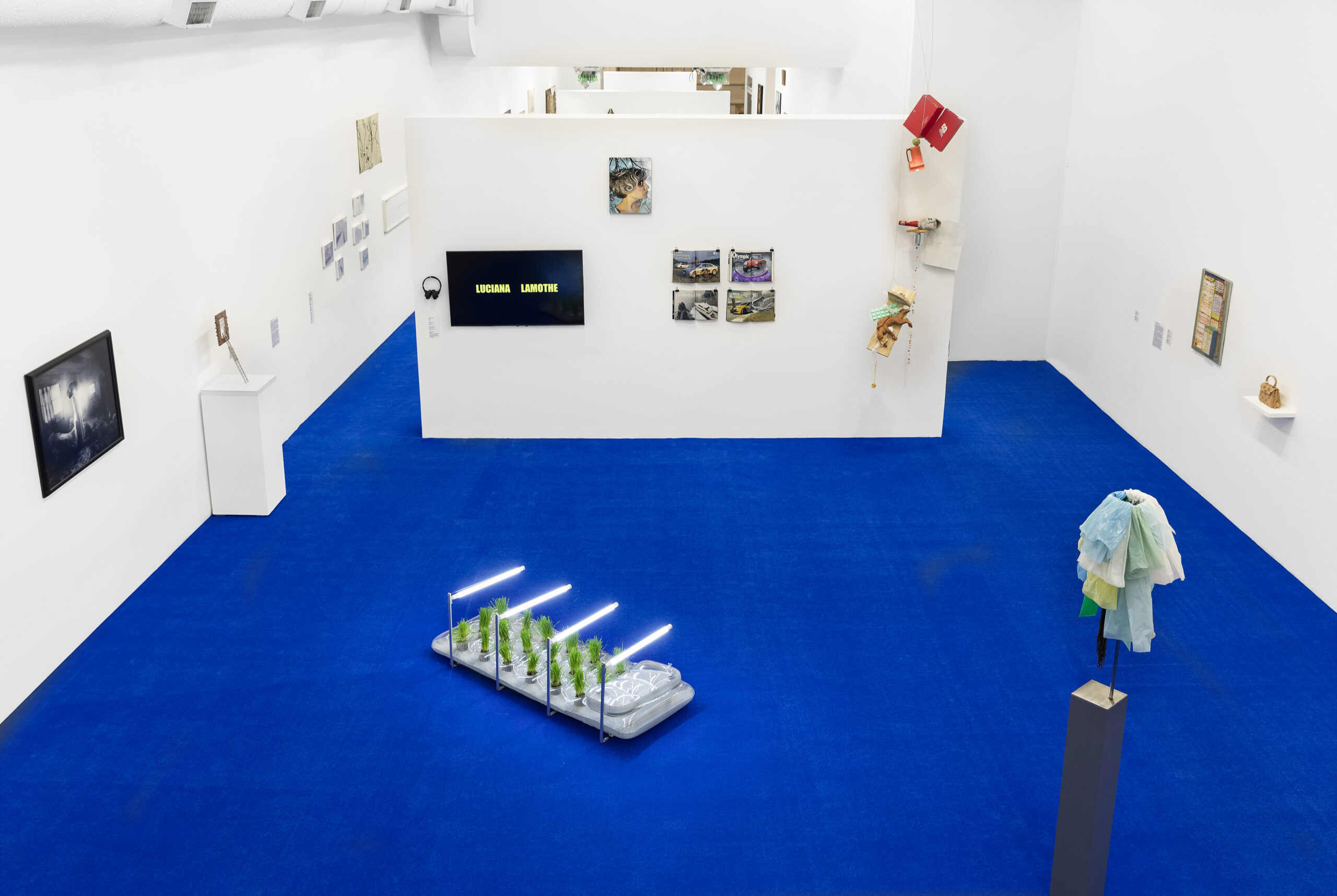
The exhibition traces the gallery’s first steps—between eclecticism and surrealism—in the family PH apartment on Valle Street, as well as its support of the avant-gardes of the 1960s and 1970s in the Talcahuano apartment; the promotion of pictorial movements in the 1980s; the incorporation of a new generation of artists in the 1990s and the creation of Currículum 0 at the iconic Florida 1000; the support of artists who grew alongside the gallery at the beginning of the twenty-first century; and its consolidation in dialogue with artists from different generations who reflect its current spirit.
At times, however, the exhibition also eschews chronology to make room for capricious atemporalities and intergenerational coexistences. From its beginnings, RBGA has been characterized by building networks in which artists with established careers live alongside new voices that cyclically renew the Argentine art scene. This trait shapes the exhibition’s itinerary and reflects the gallery’s innate capacity for reinvention, understanding contemporaneity not only as a temporal condition but as a sustained mode of positioning over more than six decades of work.
The exhibition begins and ends with works by artists from the generation that saw the gallery’s birth: Roberto Aizenberg, Luis F. Benedit, and Rogelio Polesello at one end, and Delia Cancela and Rómulo Macció—recent additions to the roster—at the other. In between, the journey pauses with Juan Batlle Planas, Antonio Berni and New Figuration; Josefina Robirosa and Emilio Renart; artists who even today, after decades of working together, continue to accompany the gallery, such as Liliana Porter and Marie Orensanz; Pablo Siquier, Ernesto Ballesteros, and Ana Gallardo; Jorge Macchi, Sebastián Gordín, Marcelo Pombo, Fabio Kacero, and Gachi Hasper; Marina De Caro, Miguel Rothschild, and Leandro Erlich; artists who had their first exhibitions at the gallery, such as Adrián Villar Rojas and Flavia Da Rin; artists who marked the first quarter of the twenty-first century, such as Luciana Lamothe, Carlos Huffmann, Eduardo Basualdo, Carlos Herrera, and Mariana Tellería; and the new generation that has joined the gallery in recent years: Stella Ticera, Ulises Mazzuca, Francisca Rey, and Andrés Piña. The exhibition offers one possible selection—among many others—of more than sixty artists to recount six decades of history and begin to glimpse the years to come.
With energy and optimism, this exhibition celebrates the resilience, commitment, and imagination not only of an art gallery, but also of the community of artists who have inhabited it at one time or another over the past six decades. It also celebrates the endurance of institutions and the fact that art can still give—once again invoking Federico Manuel’s words—“metaphysical life to a superphysical world.”