Tightrope walkers sway atop a thin wire. That is their fate: to float in the air, clinging to life with the soles of their feet. They walk more or less steadily, without looking back, without hesitation, in a single direction. And yet, where they are headed matters little. Deep down, more than the destination, it is the journey that matters. For once they cross the abyss and reach the end of the rope, they necessarily lose their condition as tightrope walkers. They leave behind their risky, fragile, porous being—always on the verge of taking flight—and instead become more polished, finished entities, less buoyant and more stone-like.
For Nietzsche, the act of balancing on a rope represents risk and transition: the creation of oneself. The figure embodies both the hope of becoming and the danger of falling into the void. It is the image of a reckless advance toward an ideal form and the affirmation of existence. But we can also think, a little earlier in time and space, of tightrope walking not as a passage toward something, but as a state of permanent transit: a way of being with one’s feet always in the air, without knowing—or needing to know—where one is going.
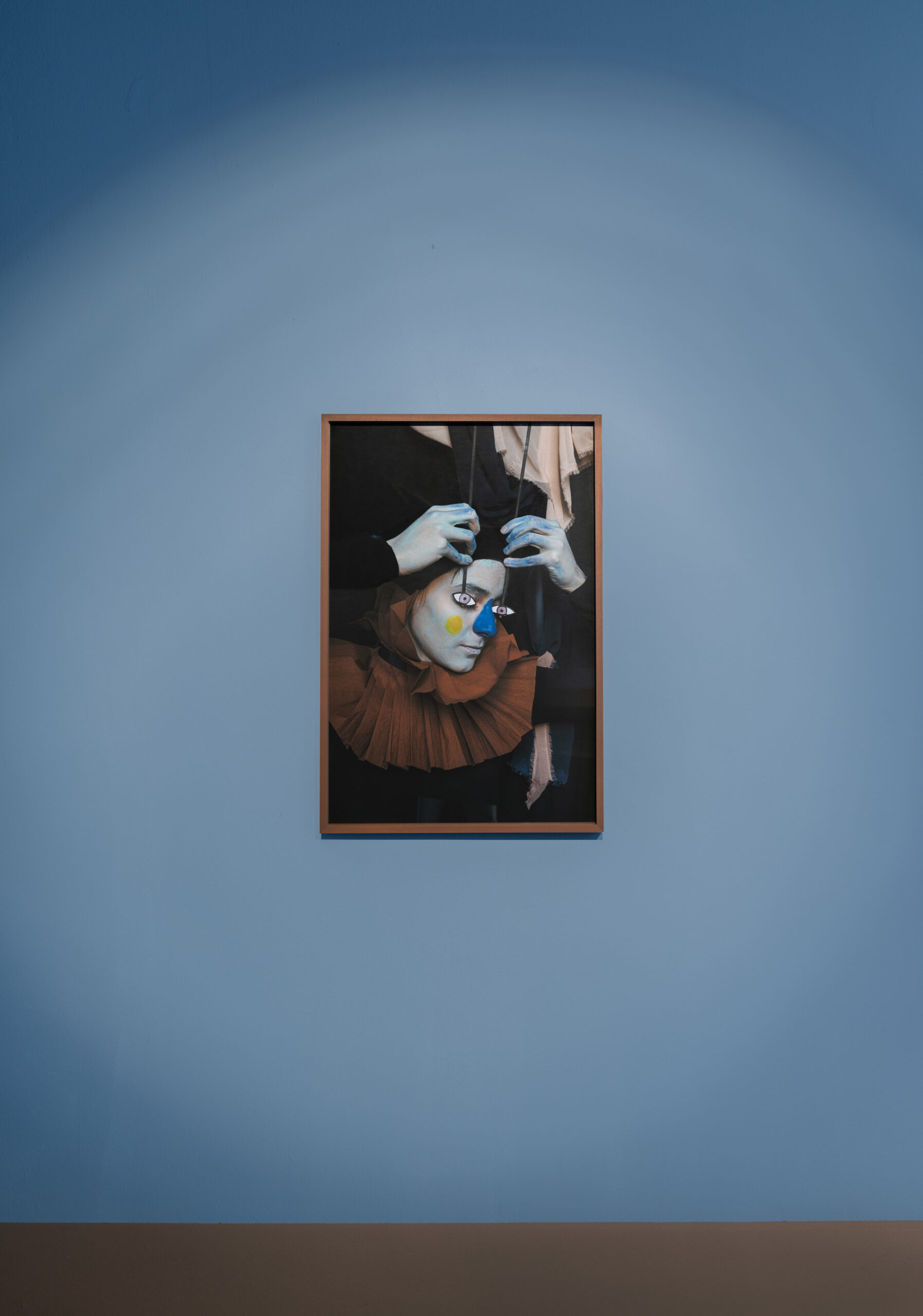
The work of Malena Pizani, like that of a full-time tightrope walker, never touches solid ground. Over the years, her constant practice between photography and handiwork, between technical rigor and academic mannerism, has given rise to a small community of ethereal, blurred, unclassifiable figures: always elusive, with multiple faces, capable of embodying gestures, emotions, and even contemporary translations of ancient Hippocratic humors. In classical terms, they would be beings as phlegmatic as they are sanguine. And it is precisely in the search for balance between these humors—or rather, in the becoming of affects—that the movement shaping her doppelgängers is activated: mirrored or nested gestures, like Chinese boxes, full of contradictions that give rise to the human experience of the world.
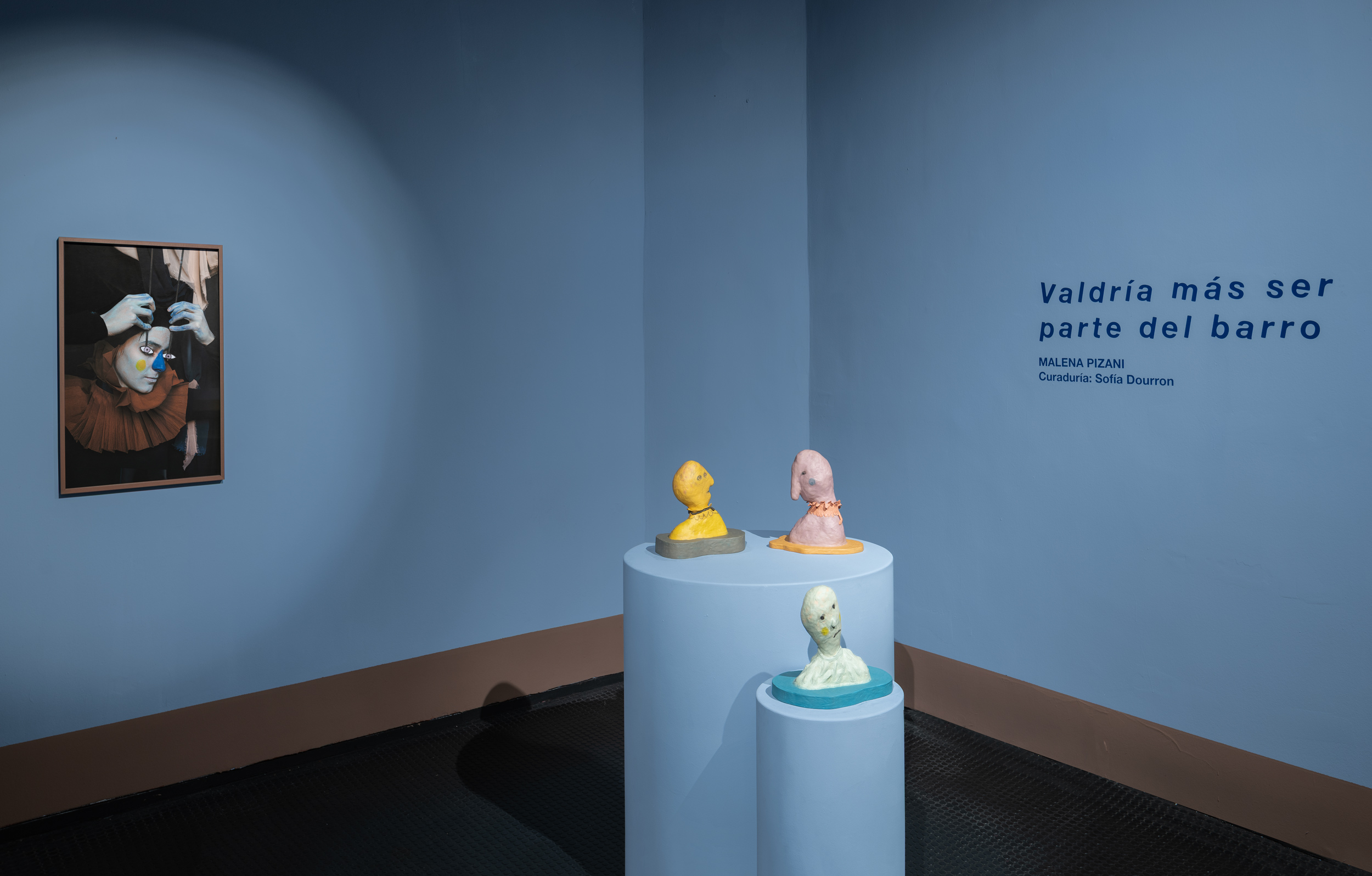
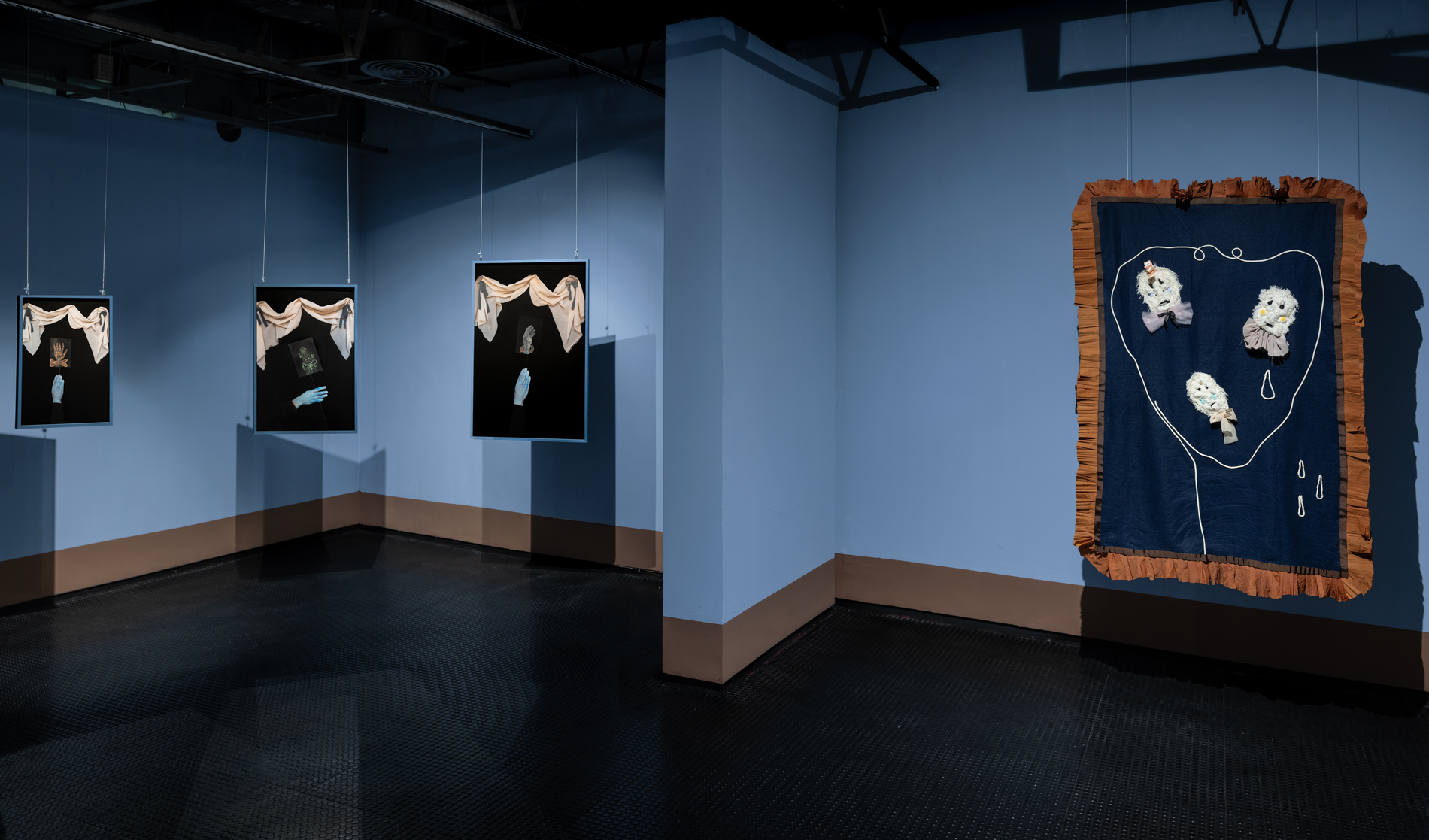
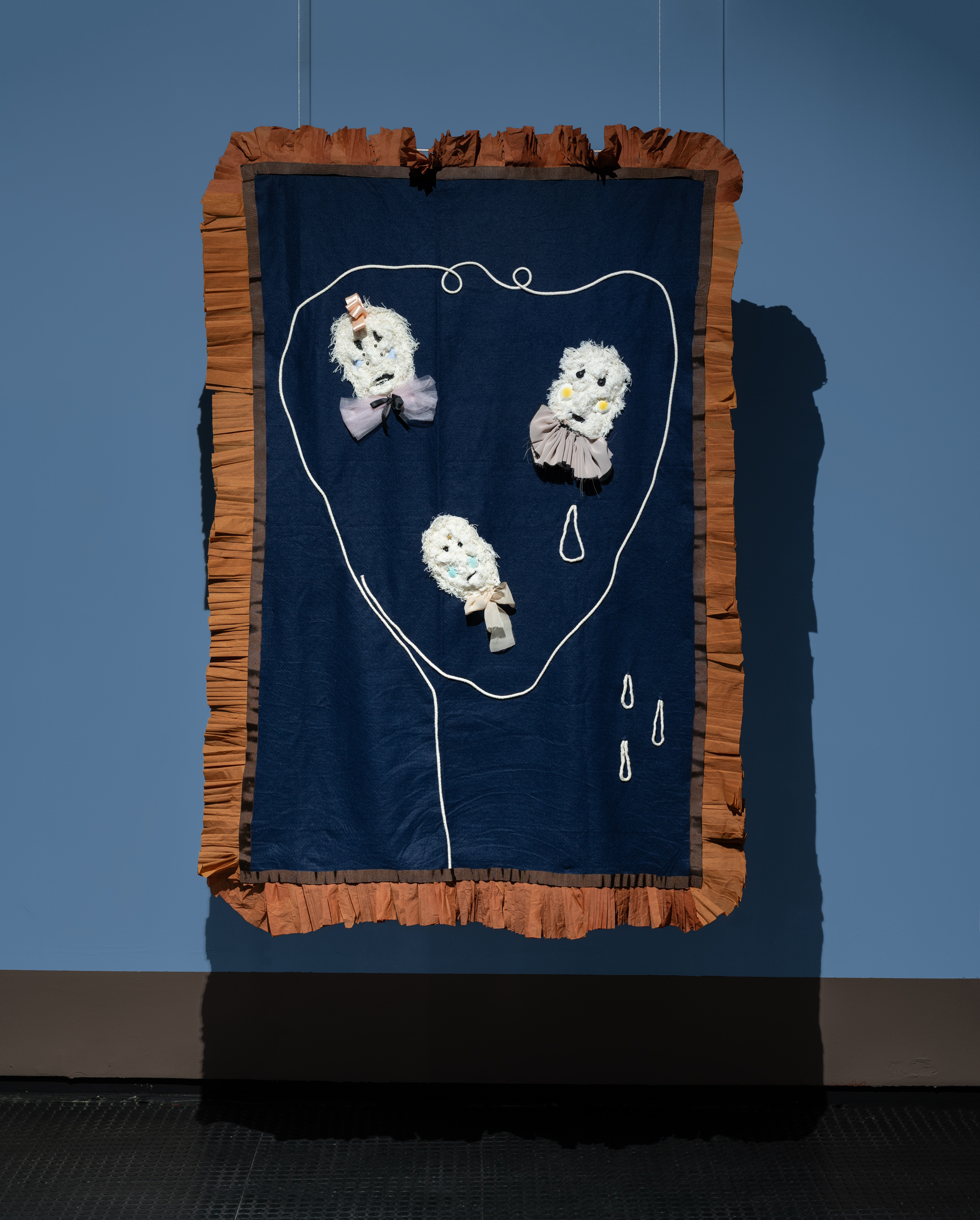
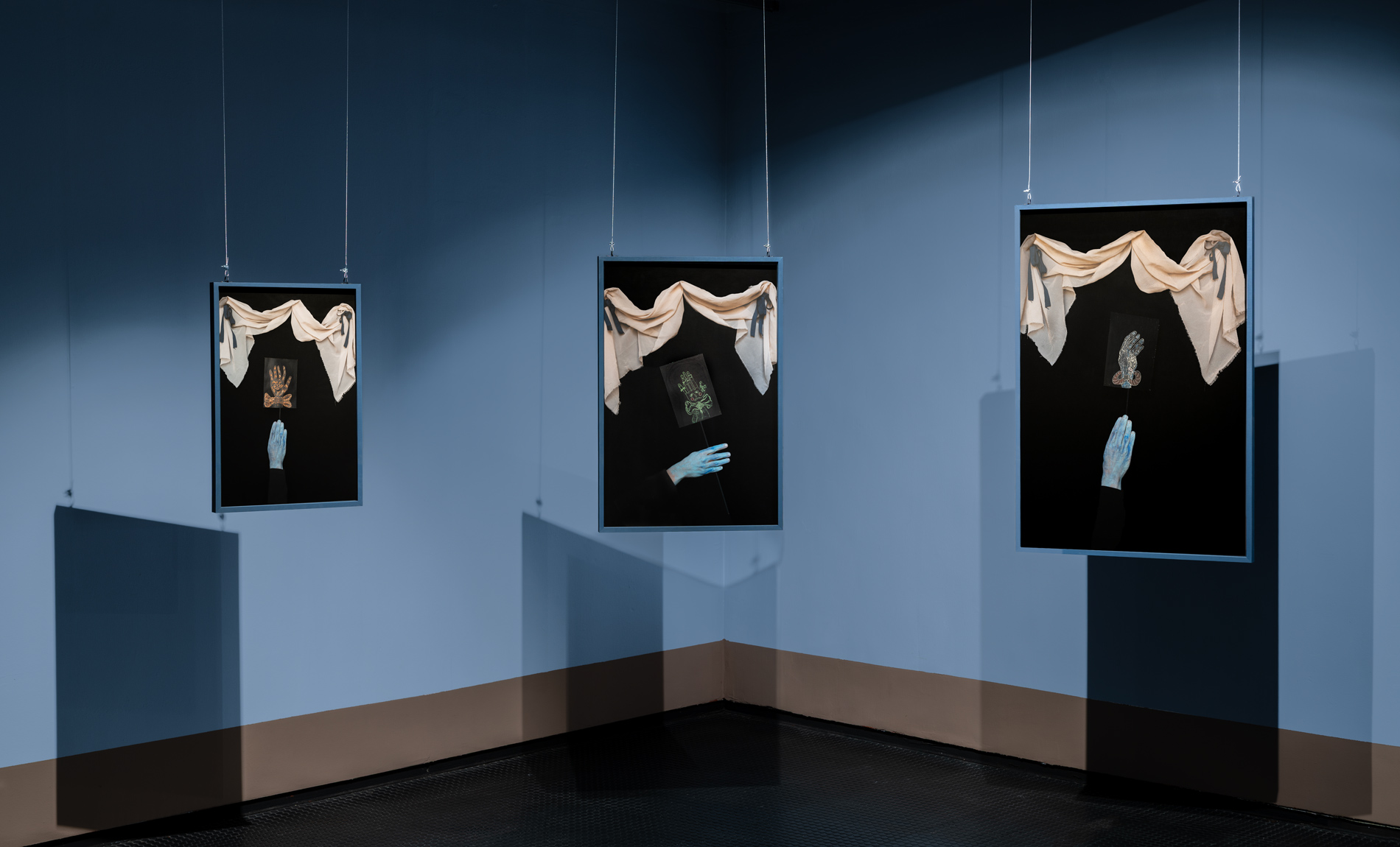
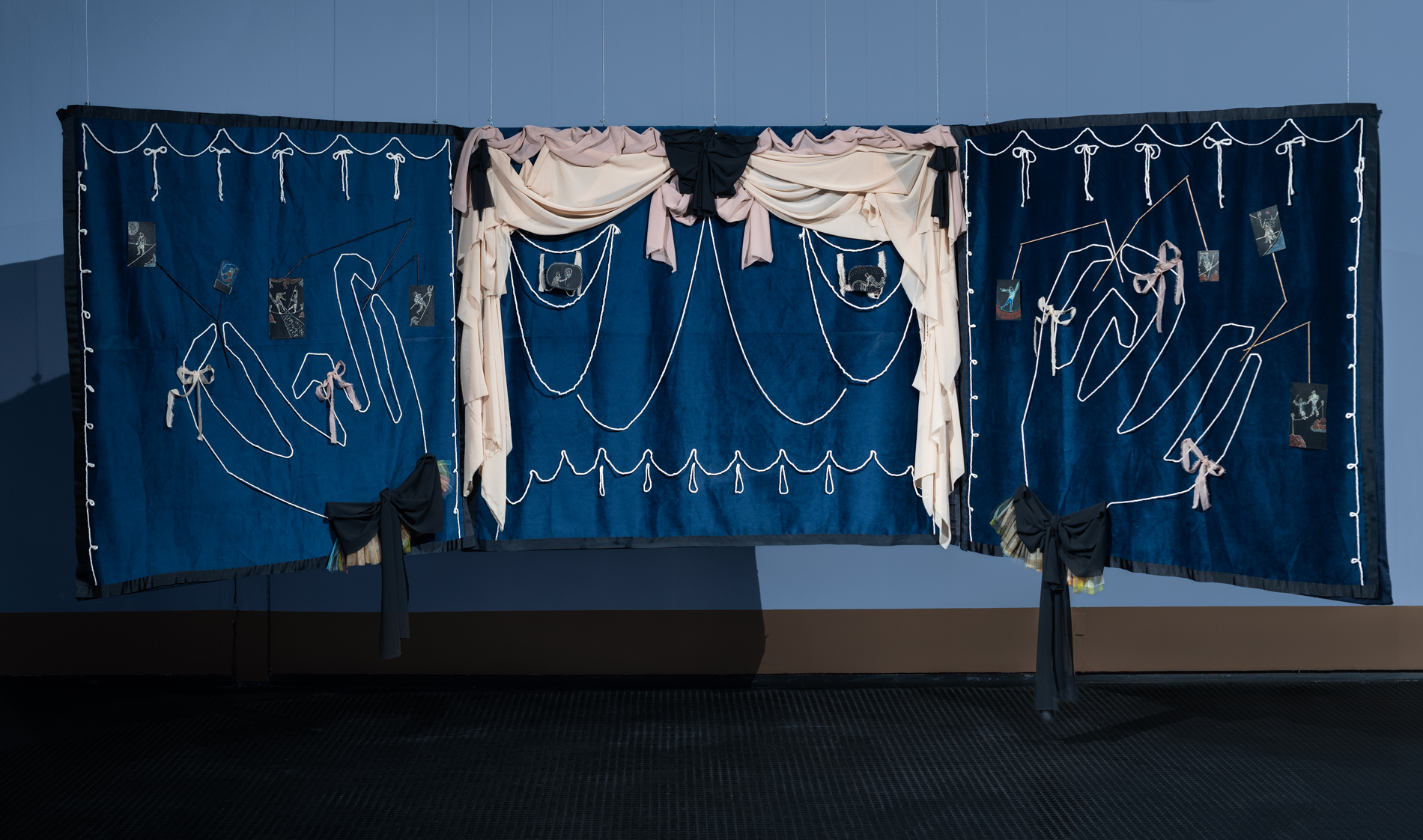
In this new theater—which is at once backdrop, puppeteer, and master of ceremonies—and which structures this exhibition, Malena once again brings onto the stage the mud of the human condition and the swaying produced by the emotions that inhabit it. Great emotions: colossal fears, such as the fear of death, and the most ardent passions. But other, smaller, slightly shy ones also take part in the scene: minor passions, so to speak. Minimal joys, tiny fears, general discomforts, childlike loves, murmured desires. Emotional gusts that, despite their smallness, push us to one side or the other of the rope and threaten to hurl us into the abysmal void that awaits below.
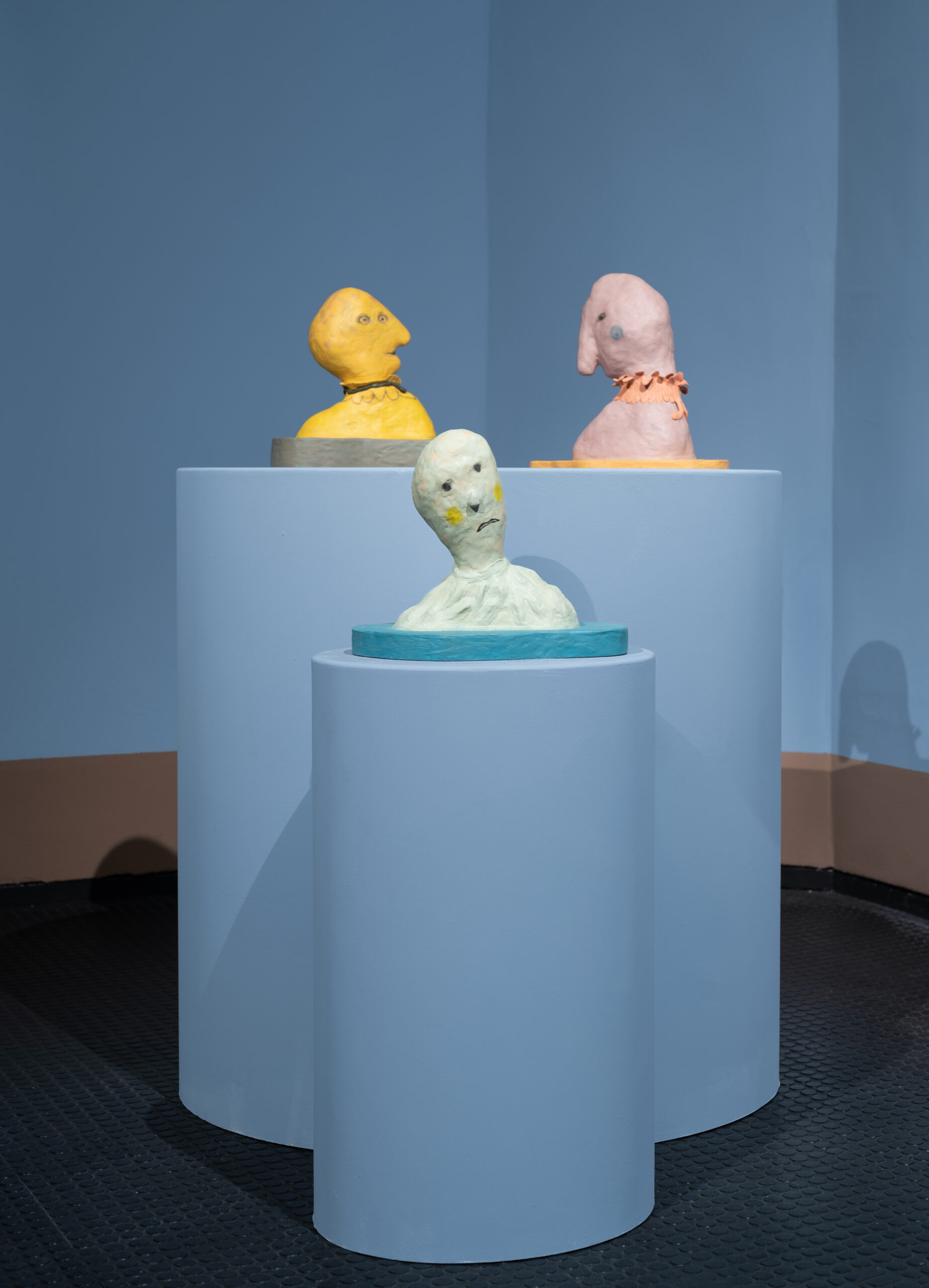
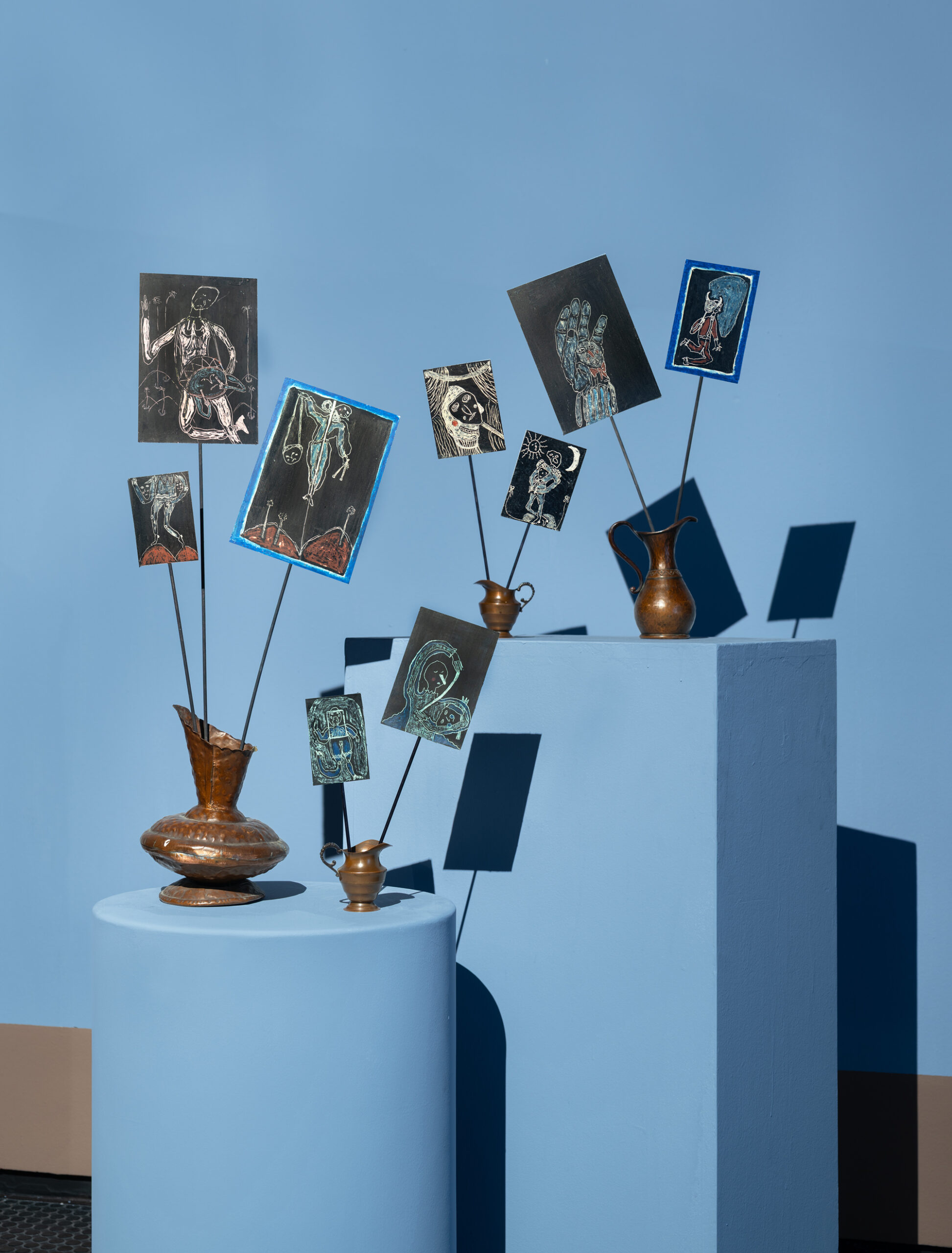
Around the soft theater/retablo, Malena composes a series of scenes that spread through the space and form constellations around the manipulating god. Characters and affects traverse the room, ricochet from one corner to another, assuming different corporealities and materialities: woolly faces, figures of colored wax, flounces of brownish crepe paper, garlands of beige-pink fabrics, drawings traced with cords, bows, and rosettes. The soft, somewhat fragile materials that Malena handles with such care in the studio become here vehicles—or rather, bodies—for a multiplicity of states of being and their transformations.
Their movements trace possible paths—often dialectical and zigzagging—for thinking about the intensities of affects: their modulations and resonances, their tensions and collisions. In their material fragility, these trajectories reveal not only the enigmatic power of the soft, but also the way affects shape both the individual experience of the world and the configuration of the social and political fabric, amorous interactions, and the most brutal battles.
From this small theater of large and tiny emotions, however, desire emerges as a driving force that sets characters and materials in motion, pushing us to persevere in the world despite everything, and without the need to fix a final destination. An invisible potency that keeps a muddy, somewhat confused, and profoundly vital existence in constant motion.